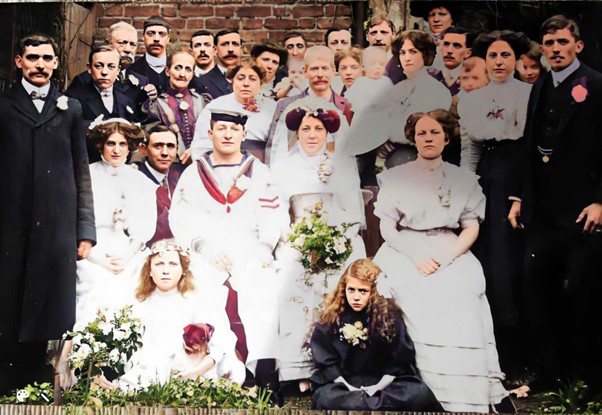
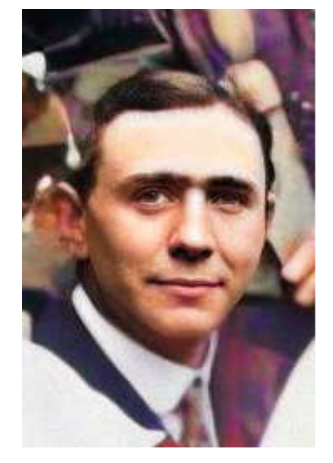
✦   Victorian Music Hall   ✦   Women's Football   ✦   London 1879–1934   ✦

Lily Flexmore

Ellen Mary Ann Dunn · Acrobatic Contortionist · Dancer · Footballer

✦   Born: 25 February 1879, Peerless Street, Islington   ✦   Died: 19 January 1934, Highgate Hill   ✦

She was sixteen when she walked onto a football pitch before ten thousand spectators. She was forty-six when she last performed her signature dance on a London stage. For nearly thirty years, as Lily Flexmore, she bent the limits of the human body on stages from Johannesburg to New York — and was returned, in death, to the city that made her.

Discover Her Story
Scroll

Who Was She?

Born Ellen, she became Lily on stage and Ruth on the football pitch

Born As

Ellen Mary Ann
Dunn

Her true name — born in Peerless Street, Islington, on 25 February 1879. Daughter of John Dunn, shoemaker, and Ellen Mary Dunnell. Second of eleven children. The name that appears on her baptism record, her marriage certificate, and her grave.

On Stage

Lily
Flexmore

The name under which she became famous. From 1895 onwards, Lily Flexmore was one of the most celebrated acrobatic contortionists and dancers on the Victorian and Edwardian music hall circuit — performing in London, New York, Paris, Berlin, Johannesburg and beyond.

On the Football Pitch

Ruth
Coupland

The pseudonym under which she played in the inaugural match of the British Ladies Football Club in 1895. The identification of Ellen Dunn as Ruth Coupland is credited to football historian Stuart Gibbs, whose research has recovered the hidden stories of the BLFC's pioneering women.

Ellen Mary Ann Dunn

Born in Peerless Street · She died in Islington · She lives in history

Origins — A London Family

Ellen Mary Ann Dunn was born on Tuesday, 25 February 1879, at 56 Peerless Street, Islington, St. Luke's, London. The site is now occupied by Moorfields Eye Hospital. She was the second of eleven children born to John Dunn, a shoemaker, and his wife Ellen Mary Dunnell.

Her parents had married on 3rd June 1876, their address at the time being White Lion Yard, London — now known as Lancashire Court, just off Brook Street in Mayfair.

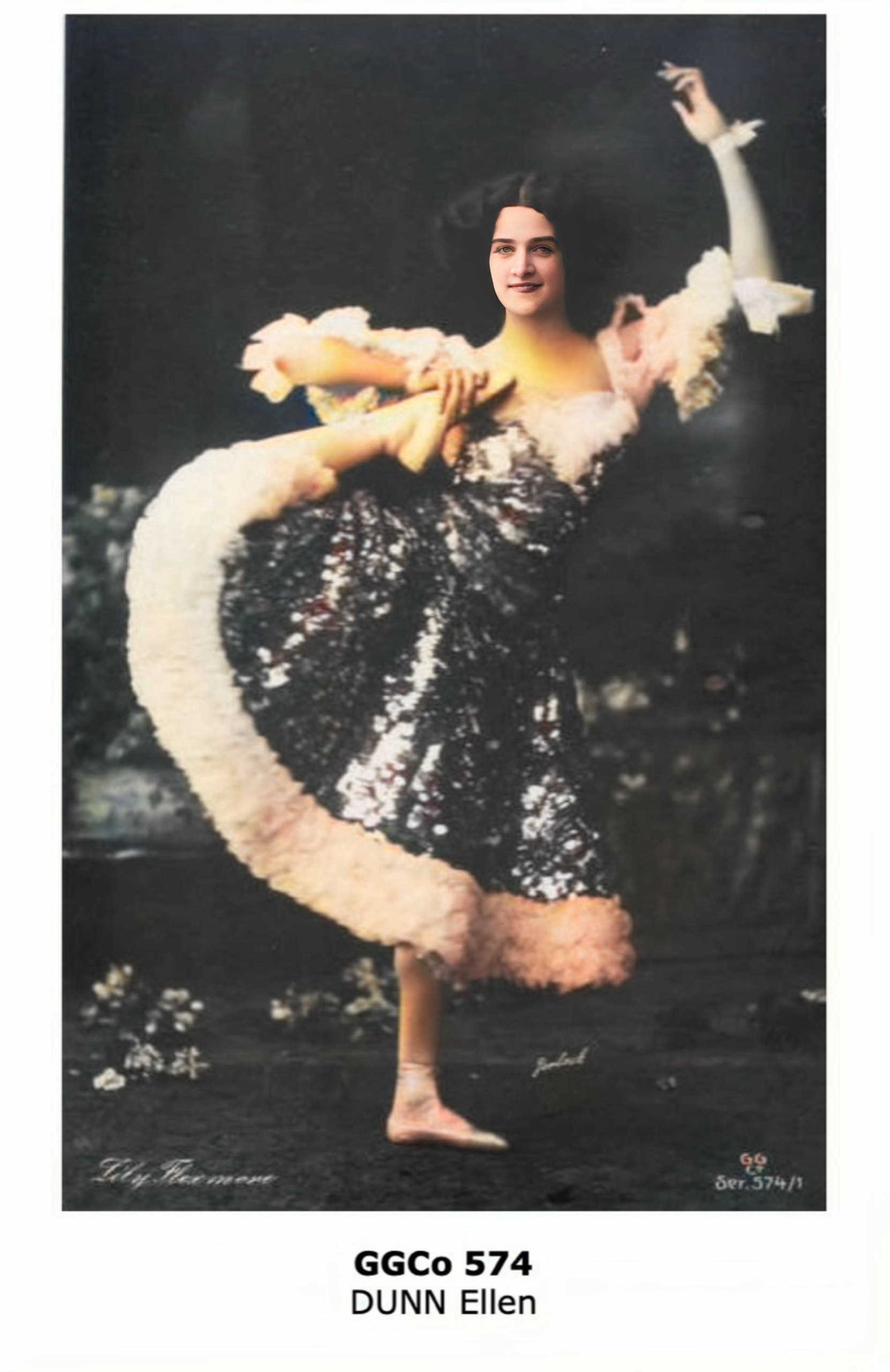
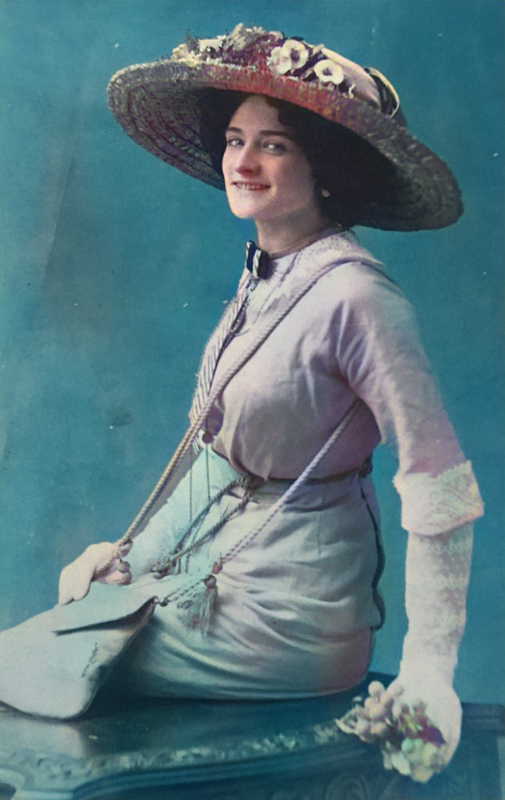
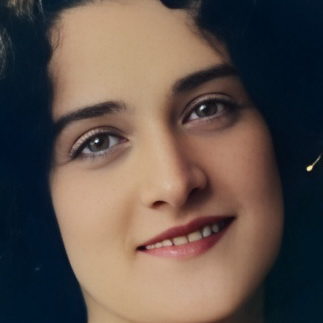
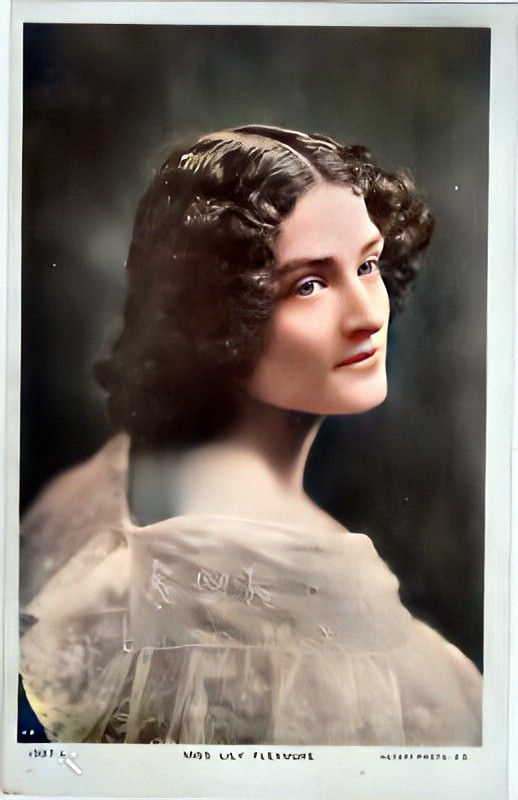
Lily Flexmore — Ellen Mary Ann Dunn — Colourised Portrait

Ellen Mary Ann Dunn · Lily Flexmore · Colourised portrait

Together John and Ellen Dunnell raised eleven children over twenty-three years, including John Joseph (1877–1946), Frederick (1881–1964), George William (1883–1943), Charles Joshua (1885–1957), Mary Ann Ada (1888–1953), Alice Maud (1891–1979), Ethel (1894–1987), Percy James (1896–1974), Albert H (1898–1964), and Henry Ambrose (1900–1995).

Childhood & Schooling

On 18th November 1884, five-year-old Ellen was enrolled at Hammond Square Primary School, Hoxton Street, London. By the time of the 1891 Census the family had moved to 108 Royston Street, Bethnal Green. It is very likely that Ellen was by this time attending a dance and gymnastics school. As well as dancing and gymnastics, she was also to become a professional contortionist of exceptional ability.

A Remarkable Life

From the Clerkenwell streets of her birth to the stages of three continents — the biography of Ellen Mary Ann Dunn is one of the most astonishing recovered from the Victorian music hall. She played football before thousands and performed contortion before emperors. She lost a child. She crossed oceans. She was admired by young women in Michigan who had never met her. She outlived her husband by only four months, and was buried beside him in Islington — the city that made her.

Ellen Mary Ann Dunn — footballer, dancer, contortionist, traveller, comedienne, and wife — lived a life of extraordinary breadth and courage. She was sixteen when she walked onto a football pitch before ten thousand people. She was forty-six when she last performed her signature dance on a London stage. She deserves to be remembered by name.

Ruth Coupland

Playing for North London — 23 March 1895

The Inaugural Match

In 1895, at just sixteen years of age, Ellen Mary Ann Dunn took part in the inaugural football match of the British Ladies Football Club. Playing under the pseudonym Ruth Coupland, she took to the field at Crouch End Athletic Ground, North London, before a crowd of some ten thousand spectators.

Ellen's team, North London, won by seven goals to one. The choice of a pseudonym was not unusual amongst the players. To appear publicly on a football field was, for a young woman of the 1890s, an act of considerable social daring — though for Ellen, the anonymity was somewhat ironic, given that she was already building a public performing career under another assumed name entirely.

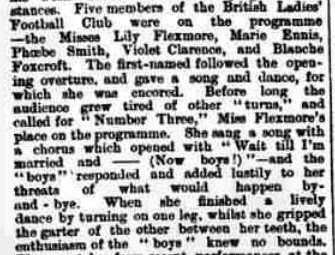
It is delightful to note that the worlds of football and performance were not entirely separate for Ellen and her fellow players. After a number of the matches, some of the ladies would put on a variety show for the crowd. Ellen had great memories of an exceptional evening at the Variety Hall in North London, following a fixture at Wembley Park Cricket Ground on 22nd January 1897. She performed alongside fellow BLFC players Phoebe Smith, Marie Ennis, Violet Clarence, and Blanche Foxcroft — and by all accounts, the show was not forgotten in a hurry.

16

Her age at the match

~10,000

Spectators at Crouch End

7–1

North London's victory

The Pseudonym

The identification of Ellen Dunn as the player known as Ruth Coupland is credited to the meticulous research of football historian Stuart Gibbs, a leading authority on the pioneering women of the British Ladies Football Club and on the early history of women's football in Britain and Ireland.

✦   Stuart Gibbs — Research Credit

His work — encompassing the art exhibition Moving the Goalposts, published academic articles, and sustained original research into the players, pseudonyms, and lives of the BLFC ladies — has been foundational to the recovery of these hidden stories.

The British Ladies Football Club was founded by Nettie Honeyball in 1894. Its inaugural match, held on 23 March 1895 at Crouch End, is recognised as a pivotal moment in the history of women's football. The players used pseudonyms both to protect their private identities and — in some cases — because they already had public professional personas they wished to keep separate from their sporting activities.

Ellen Dunn as Ruth Coupland BLFC 1895

Ellen Mary Ann Dunn · Playing as Ruth Coupland · British Ladies Football Club · 1895

BLFC North London Team 1895

British Ladies Football Club · North London Team · 1895 · Colourised · Ellen's team won 7–1 against South London · Photo: Robert Barrass Studios, Newcastle

✦   Explore the Full BLFC Story

Ellen's full biography in the context of the British Ladies Football Club, including every player, every match, and the complete research record, is available on the companion site.

Birth of the Lionesses   →

Lily Flexmore

Acrobatic contortionist, dancer, singer, comedienne

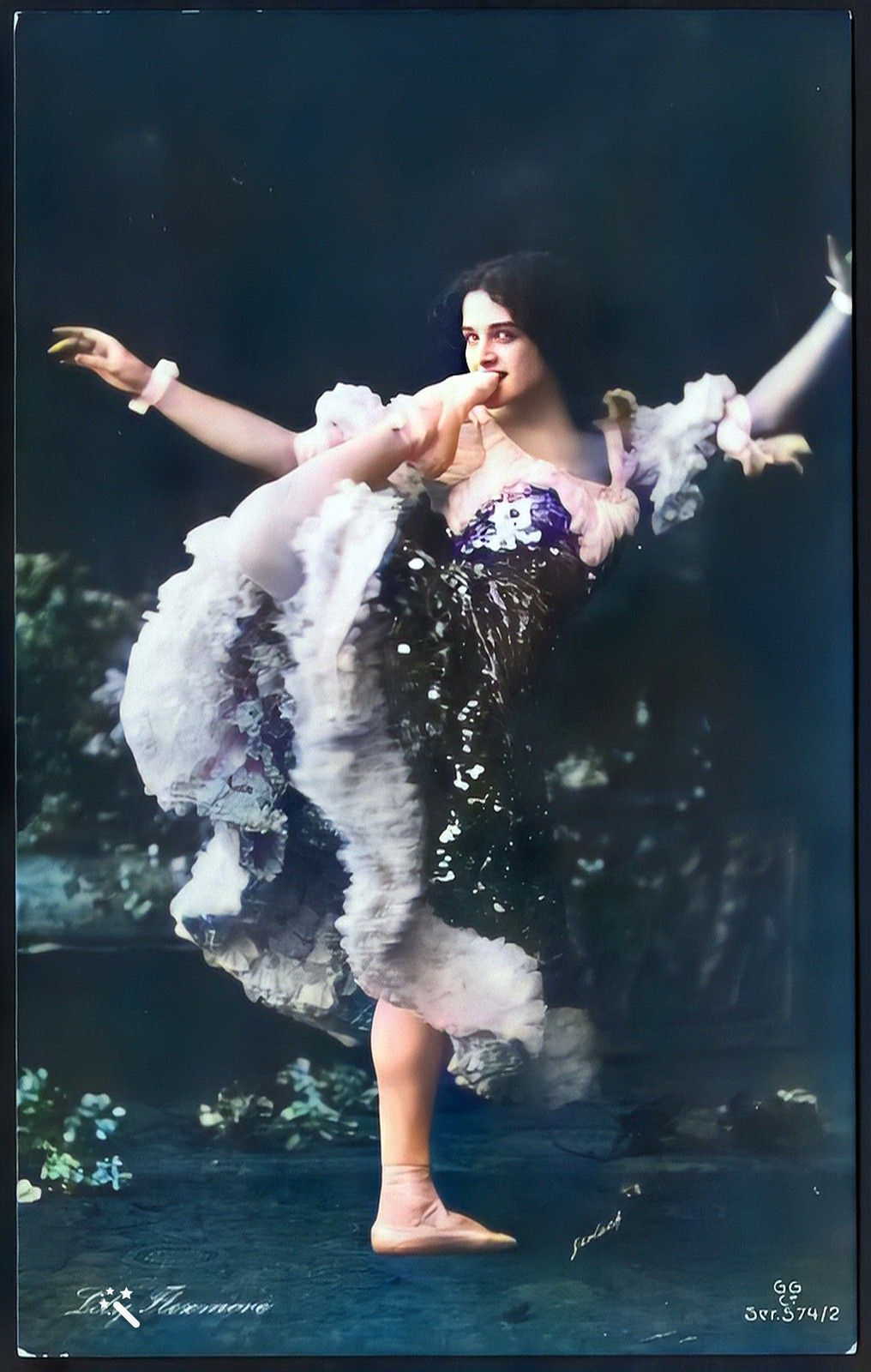
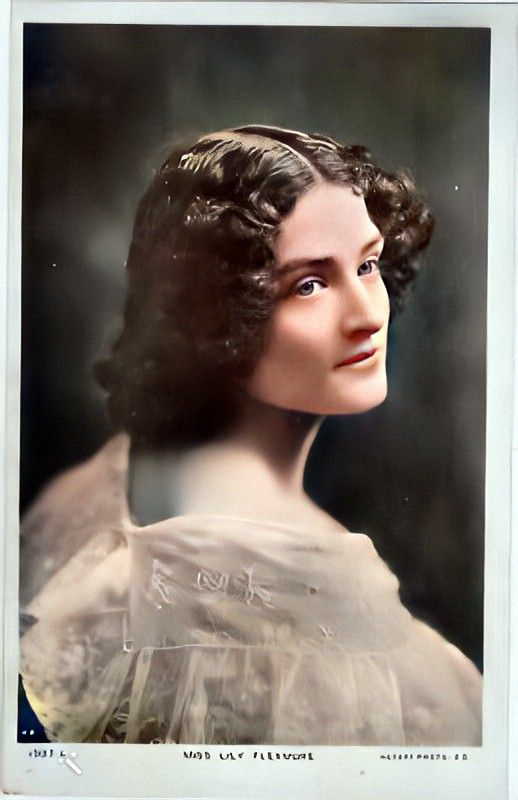
Lily Flexmore by Gerlach

Lily Flexmore · by Gerlach

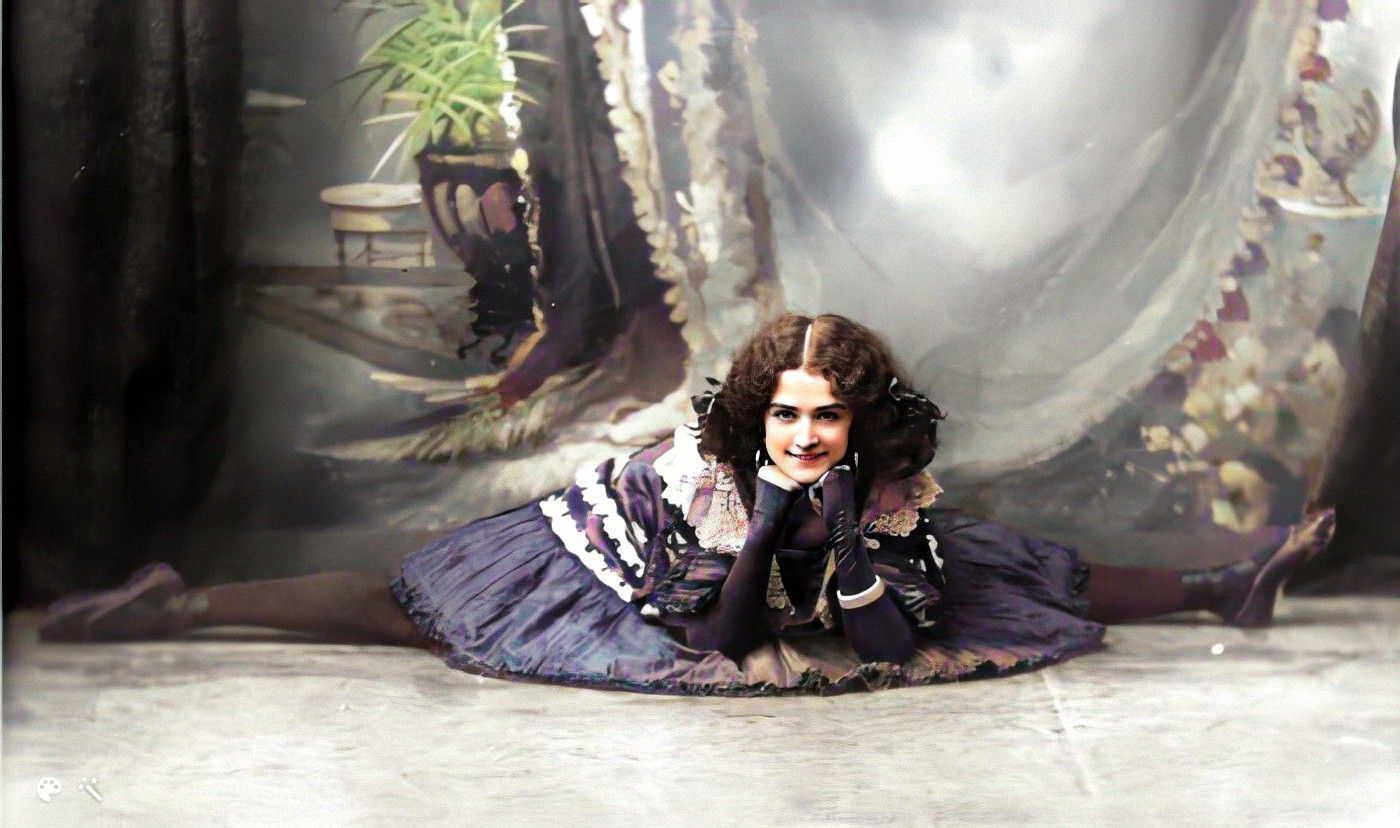
Lily Flexmore Reverse Handstand

Lily Flexmore · Reverse Handstand

Her Career

From 1895 onwards, Ellen — performing under the stage name Lily Flexmore — embarked on what would become a long, successful, and genuinely remarkable career in the Victorian and Edwardian music hall. She was a professional dancer, contortionist, singer and comedienne, celebrated in particular for her signature “Toe-In-Mouth” dance, which she was still performing at the age of forty-six in 1925.

At just eighteen years of age, Ellen travelled to South Africa to appear at the Empire Theatre, Johannesburg. She appeared all over the United Kingdom and Ireland between 1898 and 1925. In December 1907 she and her husband George sailed from Southampton aboard the White Star Liner RMS Adriatic, departing on 18th December 1907 and arriving in New York on 27th December — which meant that Ellen and George spent Christmas Day at sea. Among their fellow passengers was the music hall comedian Whit Cunliffe, also travelling to perform in New York. The Adriatic on this voyage was captained by Edward John Smith — the very same captain who would later take command of the ill-fated RMS Titanic in April 1912. From New York, Ellen and George went on to Chicago for the Chicago Auditorium. Ellen subsequently toured the USA on the Orpheum Theatre Circuit — forty-five theatres across thirty-six American cities — and toured Canada to glowing reviews.

✦   A Note from the Researcher   ✦

Pure Conjecture — But Is It?

What follows is informed speculation. It is not proven. But the evidence points somewhere, and this is where I believe it points.

Ellen and George arrived in New York with a contract issued by the theatrical firm of Klaw & Erlanger. It was, on the face of it, a prestigious arrangement — Klaw & Erlanger were among the most powerful impresarios in America. But the contract contained a provision that was, in practical terms, punishing: it was what was known as a “No Fares” contract, meaning that Ellen and George would be required to meet all their own travel costs as they made their way across the Orpheum Circuit — forty-five theatres across thirty-six American cities. For a couple newly arrived from London, this was not merely inconvenient. It was a serious financial imposition on every engagement they played.

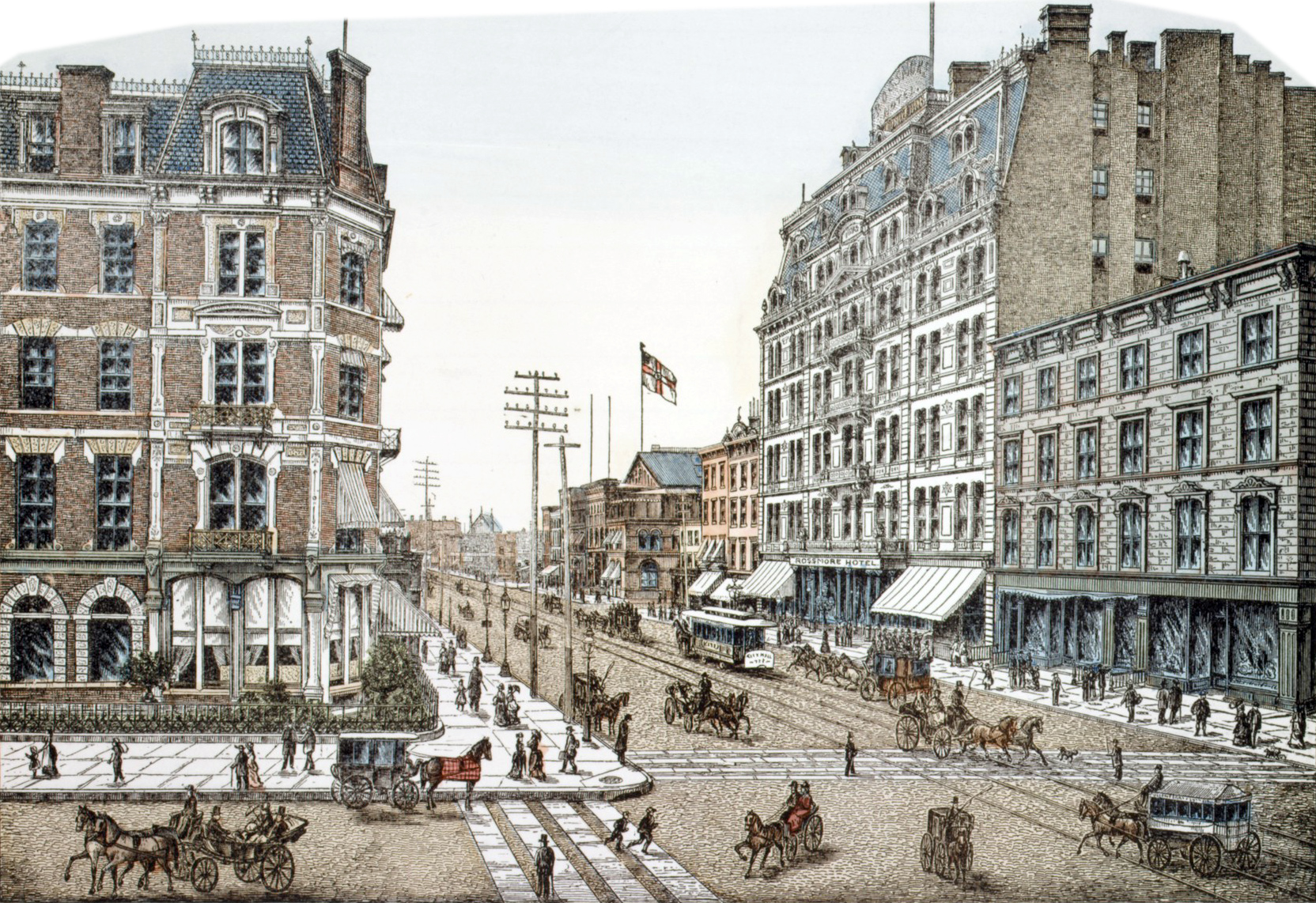
On the passenger manifest, Ellen and George gave their destination address in New York as 270 West 39th Street & 8th Avenue — the Hotel Rossmore, one of the principal hotels of the New York theatrical district, favoured by visiting performers from Britain and Europe. They had stepped off the Adriatic and walked straight into the heart of Broadway.

✦   A Moment to Imagine   ✦

Before the gangplank, before the manifest, before the Hotel Rossmore and Broadway and the gaslit theatres of New York — there was a kitchen in 108 Royston Street, Bethnal Green.

Picture it. The range going, the smell of coal and something cooking. John Dunn — leather worker, waterside labourer, a man whose whole world was London’s streets, its docks, its yards — sitting at the table with his hands around a cup. His wife Ellen Dunnell, of staunch London stock, standing or sitting nearby, as London women of her generation did — composed, practical, not given to fuss, but listening. And across the table: their daughter Ellen — their Ellen — and her husband George, telling them about America.

For John and Ellen Dunnell, going outside London was already a remarkable thing. The idea of crossing to the Continent — to Paris, to Berlin, to the south of France, the places where their daughter had already performed — would have been almost incomprehensible. But this was different. This was America. A place that existed, for people of their world and generation, somewhere between legend and hearsay. A place you read about in the newspapers. A place people went to and sometimes never came back from. A place of impossible scale — cities larger than anything England had produced, distances that swallowed the whole of Britain like a stone dropped in a river.

And here was their daughter — the girl who had danced her way out of Peerless Street, who had played football before ten thousand people at sixteen, who had bent her body into shapes that defied description on stages across Britain and Europe — telling them she was going there. Sailing on a great liner. Arriving in New York. Performing at the Chicago Auditorium, at the New York Theatre, at forty-five stages across thirty-six American cities.

What did John say? Did he get up and stand by the window? Did Ellen’s mother ask about the crossing — how long, how rough, what would they eat? Did they talk about it for weeks beforehand, this thing that was coming — the great departure — going over it again and again in the evenings until it had worn itself into something almost ordinary, the way families do with the extraordinary things that happen to them?

I think John Dunn was proud beyond any word he would have used for it. A man who worked the docks and cut leather for a living, whose own world had been bounded by the streets of Bethnal Green and Clerkenwell, watching his daughter prepare to cross an ocean and perform in the greatest cities in the world. I think he didn’t say much. Men of his kind and generation rarely did. But I think he felt it — the sheer, staggering, improbable distance between 108 Royston Street and the Hotel Rossmore, Broadway, New York — and I think some part of him understood that his daughter had made that distance herself, with her own body and her own determination, one performance at a time.

The kitchen in Royston Street is gone now. The whole street is changed beyond recognition. But that conversation happened. On some winter evening in late 1907, in a house in Bethnal Green, a family sat around a table and talked about America — and the girl at the centre of it all would be on a ship before Christmas.

The manifest also records, with the dispassionate precision of an immigration official, exactly who Ellen was at that moment. She stood five feet four inches tall. She had a fair complexion, brown hair and blue eyes. She had £100 in her possession. It is a small portrait — four details on a government form — but it is the closest thing we have to standing beside her on the gangplank as she arrived in America for the first time, looking out at a city she had never seen, with a hundred pounds and a name that was already beginning to mean something.

Rossmore Hotel, Broadway, New York, 1904
Broadway and the Rossmore Hotel, New York, 1904 — coloured illustration

The Hotel Rossmore, Broadway & West 39th Street, New York · 1904 · Left: photograph showing the Rossmore sign on the building’s flank, Broadway stretching away below · Right: coloured illustration of Broadway showing the hotel awning on the right-hand side of the street · Ellen and George arrived into this world on 27th December 1907

What happened next is documented. On 4th January 1908, Variety Magazine — Vol. 9, No. 4 — carried an announcement reporting that the contract had been torn up and a new one issued in its place. The terms of the new contract are not recorded. But something — or someone — had intervened.

After Chicago, Ellen returned to New York and began an engagement at the New York Theatre. She started on a Tuesday — delayed one day by a train wreck — and played out most of January before embarking on the Orpheum tour. The owner of the New York Theatre was Tony Pastor.

Tony Pastor was, by 1908, nearing the end of a career that had made him one of the most beloved figures in American entertainment. He was a larger-than-life New Yorker — generous, gregarious, and fiercely principled about one thing above all others: that the theatre should be a place where families could sit together without embarrassment. For decades he had insisted, at every venue he ran, that every act, every song, every routine should be fit for a mother and her children. It was not a commercial calculation. It was a personal creed. He retired later that year, in the autumn of 1908, and died the following year. He was a man at the very end of his journey.

I believe that Tony Pastor watched Ellen perform at the New York Theatre in January 1908. I believe that what he saw stopped him. Her act — the extraordinary physical control, the grace under impossible strain, the comedy woven through the contortion, the sheer joyfulness of it — was precisely the kind of performance he had spent his life championing: brilliant, daring, and entirely suitable for every seat in the house. I think he was captivated.

And I think — I have no proof of this, only the strong conviction of someone who has spent years living with these people — that he invited Ellen and George to lunch or dinner. That somewhere in a New York restaurant, over a good meal, he asked them how they were finding America. And that Ellen or George, perhaps with more candour than diplomacy, told him about the Klaw & Erlanger contract and what it was costing them.

Tony Pastor was a dedicated family man who had spent fifty years protecting performers and audiences alike. I do not think he would have heard what Ellen and George had to say and simply changed the subject.

He was a man of considerable influence and a lifetime of accumulated relationships in the American theatrical world. A man who believed, genuinely and passionately, in fair dealing. And he was watching a young woman from London — not yet thirty, already extraordinary — being sent around his country at her own expense under a contract that had been written to suit the people who issued it, not the person who signed it.

I believe it was Tony Pastor who tore up that contract. I believe he picked up a telephone, or wrote a letter, or walked into an office — as men of his standing and temperament did — and made clear that something needed to change. And I believe that the new contract, the one announced in Variety on 4th January 1908, was the result.

I know this is conjecture. I have no document to prove it, no letter, no diary entry, no witness account. But the timing fits. The character fits. The circumstance fits. And in fifty years of working with evidence, I have learned that when everything fits, it is usually because something happened.

Source: Variety Magazine, Vol. 9, No. 4, 4th January 1908 — announcement of the replacement of Ellen Flexmore’s Klaw & Erlanger contract.

International Tours

In 1909 she appeared at the Marigny Theatre in Paris, then at the Apollo Theatre, Berlin. In November 1910 she performed at the Union Theatre in Strassburg, and in March 1912 in Beausoleil, France, on the Côte d'Azur, just above Monaco.

A Consummate Professional

A body trained to the limits of human possibility

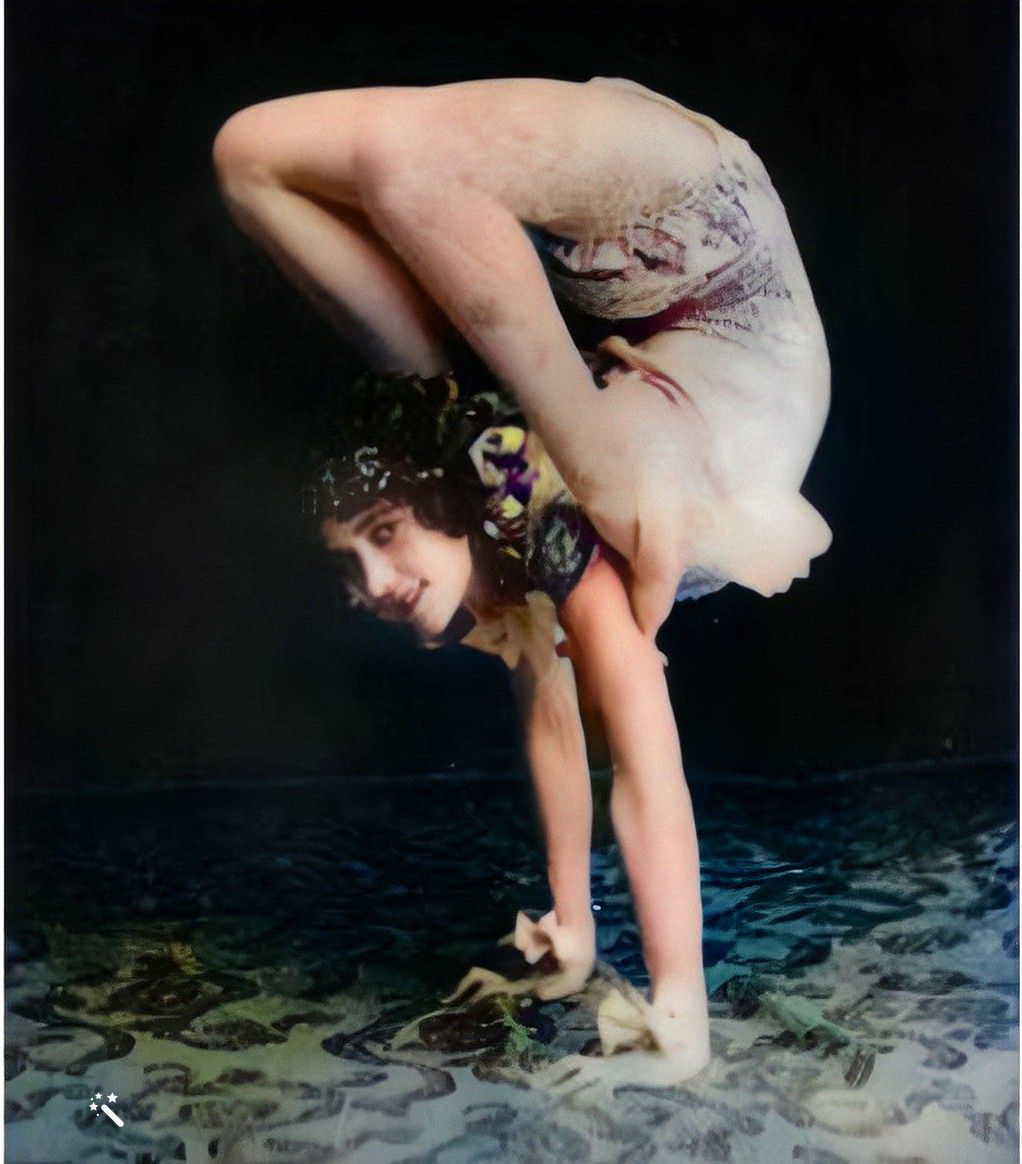
Lily Flexmore The Back Bend — Colourised Promotional Photograph

Lily Flexmore · The Back Bend · Colourised promotional photograph
Image courtesy of Paul Duffett

What you see in her photographs is not a trick of the camera, nor a posture available to the merely flexible. It is the result of years — almost certainly a decade or more — of relentless daily training that would have begun in childhood, when the connective tissues of the spine, hips and shoulders are still sufficiently pliable to be shaped by disciplined, progressive work.

In her back-bend pose, every pound of her weight is borne by two points alone — her forehead and her heels. Yet her hands are turned gracefully upwards, her wrists barely grazing the stage, her fingers loose and open, as though she were simply resting. Those upturned palms are not an accident. They are a declaration: I am not holding myself up. I do not need to.

She did not perform like this because it came easily. She performed like this because she had devoted her life to the work.

Ellen Dunn performed positions of this difficulty on stages from London to Johannesburg, from New York to Berlin, for nearly thirty years.

✦   A Tribute from Across the Atlantic   ✦

In early 1908, the young women of Saugatuck, Michigan — a small town on the eastern shore of Lake Michigan — were organising a Leap Year Ball. They sent anonymous invitations to the young men of the town, each signing not with her own name, but with that of a famous actress or artiste. The gentlemen would reply to a box number, addressed to the celebrity of their choice, hoping to be partnered with the young lady who most took their fancy.

The names chosen were among the most celebrated women on the English-speaking stage: Ms Fay Templeton, Ms Ellen Terry, Ms Dorothy Kenton, Ms Julia Marlowe, Ms Blanche Ring, Ms Rose Melville, Ms Anna Held, Ms Olive Vale, Ms Elsie Janis, Ms Maxine Elliott, Ms Edna Allen — and Ms Lily Flexmore.

Ellen had been in the United States for barely a month. That the young women of Saugatuck placed her name in such company — alongside Ellen Terry, Anna Held and Maxine Elliott, women whose fame spanned two continents — is among the most eloquent testimonies to the heights of renown she had achieved. Thousands of miles from home, in a small lakeside town in Michigan, the name Lily Flexmore was one that young men were expected to recognise and wish to dance with.

✦   Saugatuck, Allegan County, Michigan, USA   ·   28 February 1908

Press & Playbills

Newspaper clippings, playbills and posters from Lily Flexmore’s career · 1897–1917

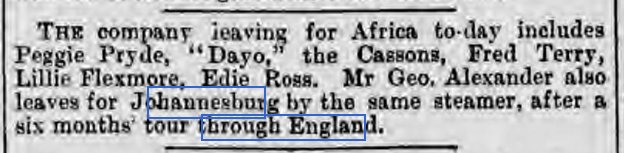
Leaving for South Africa 1897

4 December 1897

Leaving for South Africa

Press notice of Lily’s departure for Johannesburg — her first international engagement, aged eighteen.

Variety Hall North London 1897

22 January 1897

Variety Hall, North London

Five BLFC members on the programme. Lily performed a song and dance and was encored by the audience.

Alhambra Theatre Varieties Poster 1898

1898

Alhambra Theatre of Varieties

Programme cover for the Alhambra, General Manager Alfred Moul. Lily billed as “The Champion Acrobatic Dancer of the World.”

Alhambra Hull April 1898

1 April 1898

Alhambra, Hull

“Just returned from South Africa, and a tremendous success.” Agent: R. Voss.

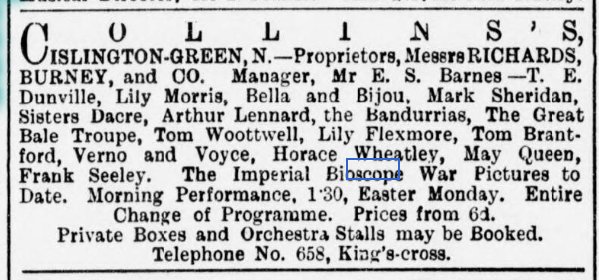
Collins Music Hall Islington 1900

7 April 1900

Collins’s Music Hall, Islington

Lily on the bill with T.E. Dunville, Lily Morris and Mark Sheridan at the legendary Islington Green hall.

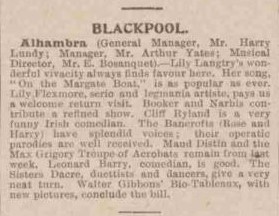
Shares Bill with Lily Langtry Blackpool 1900

1900

Sharing a Bill with Lily Langtry

Alhambra, Blackpool review: Lily Flexmore named alongside Lily Langtry as “serio, comedian and leg-mania artist.”

India Rubber Girl Bristol 1900

14 December 1900

“The India Rubber Girl” — Bristol

Bristol Music Hall review: “Lily Flexmore, the India rubber girl, gives a novel performance.”

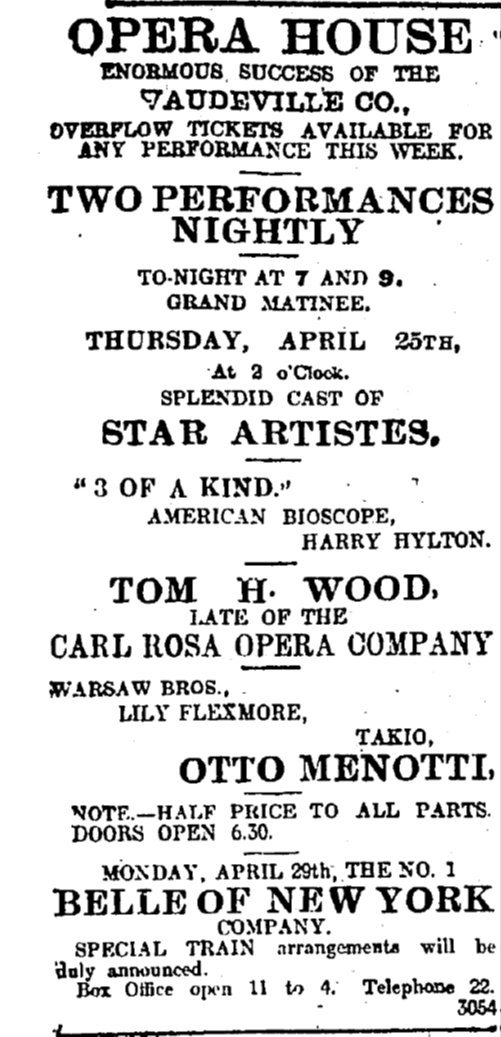
Cork Opera House 1907

23 April 1907

Cork Opera House

Programme for Lily Flexmore’s appearance at the Cork Opera House, part of her extensive Irish touring.

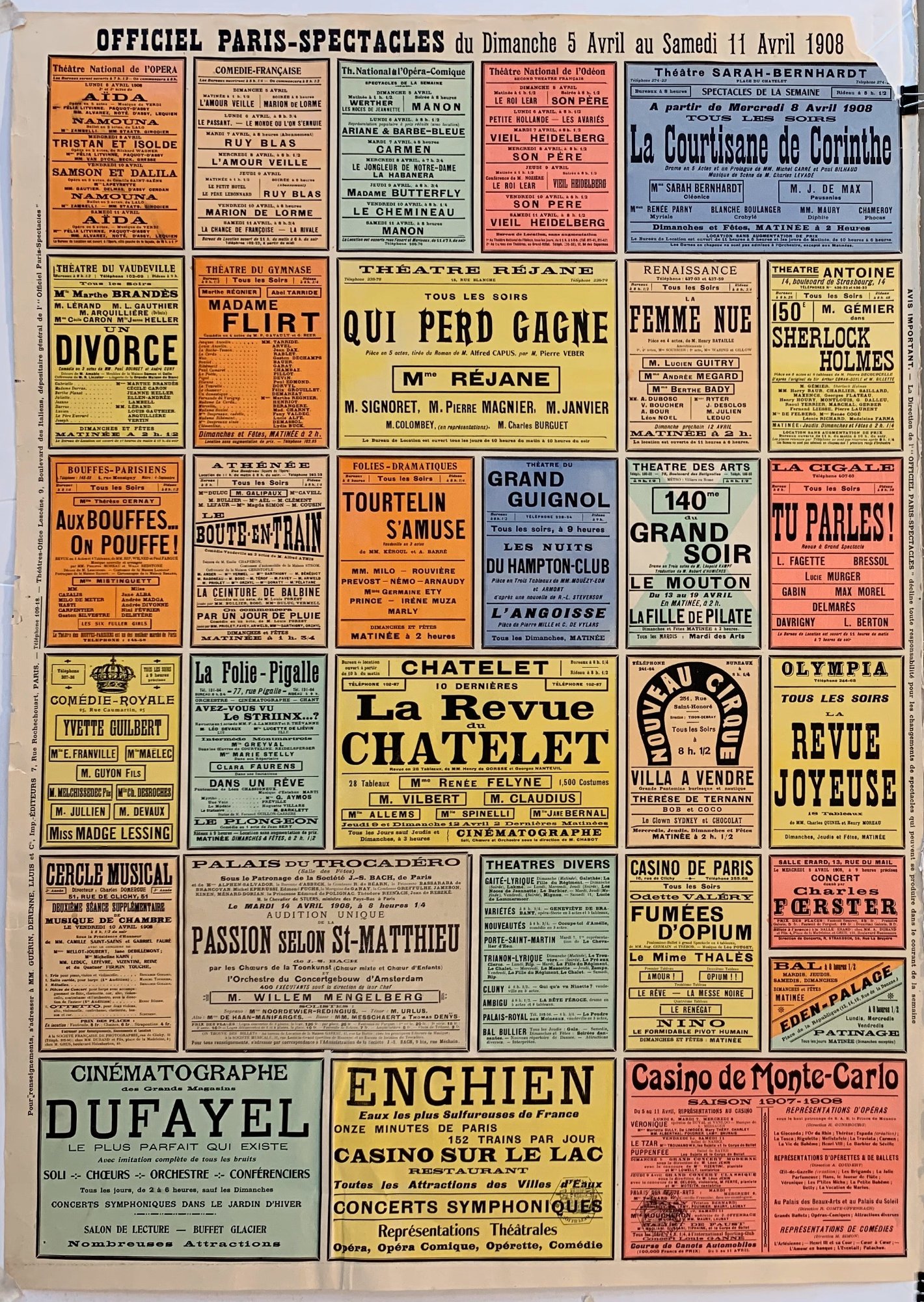
Paris Spectacles Officiel April 1908

5–11 April 1908

Officiel Paris-Spectacles

The official Paris entertainments listings for the week — from the Opéra to the Grand Guignol. Lily was performing in Paris that year.

Berlin Wintergarten June 1908

9 June 1908

Berlin Wintergarten

Programme listing Lily Flexmore as “Akrobat. Tänzer” alongside the Trapnell Family and Therese Renz.

Berliner Tageblatt 1909

5 September 1909

Berliner Tageblatt

Masthead of the Berliner Tageblatt — one of Berlin’s leading papers, in whose pages Lily’s engagements were advertised.

Orpheum Circuit Poster

1908

Orpheum Circuit of Theatres

The iconic Orpheum Circuit poster. Lily toured 45 theatres across 36 American cities, billed as “The Extraordinary Girl.”

Orpheum Memphis March 1908

22 March 1908

Orpheum Theatre, Memphis

Memphis Orpheum advertisement: “Lily Flexmore — The Extraordinary Girl.” Performances twice daily.

Saugatuck Leap Year Ball 1908

February 1908

The Saugatuck Leap Year Ball

The young women of Saugatuck, Michigan chose Lily’s name alongside Ellen Terry and Anna Held for their anonymous invitations.

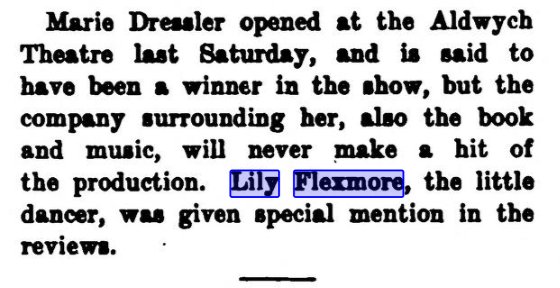
Marie Dressler Show Aldwych 1909

6 March 1909

Marie Dressler’s Show — Aldwych

“Lily Flexmore, the little dancer, was given special mention in the reviews” — singled out amid a major company.

Le Figaro Marigny Paris 1909

27 August 1909

Le Figaro — Théâtre Marigny

Le Figaro: “A Marigny: Miss Lily Flexmore, the flexible girl” — listed alongside Ida Rubinstein at the Olympia.

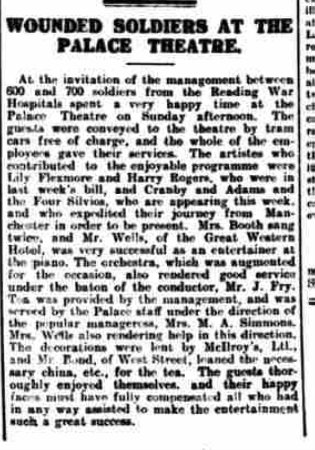
Wounded Soldiers Palace Theatre 1917

October 1917

Wounded Soldiers — Palace Theatre

Benefit performance for 600–700 wounded soldiers from the Reading War Hospitals. Lily gave her services voluntarily.

Reynolds Newspaper Stageland June 1911

26 June 1911

Reynolds’s Newspaper

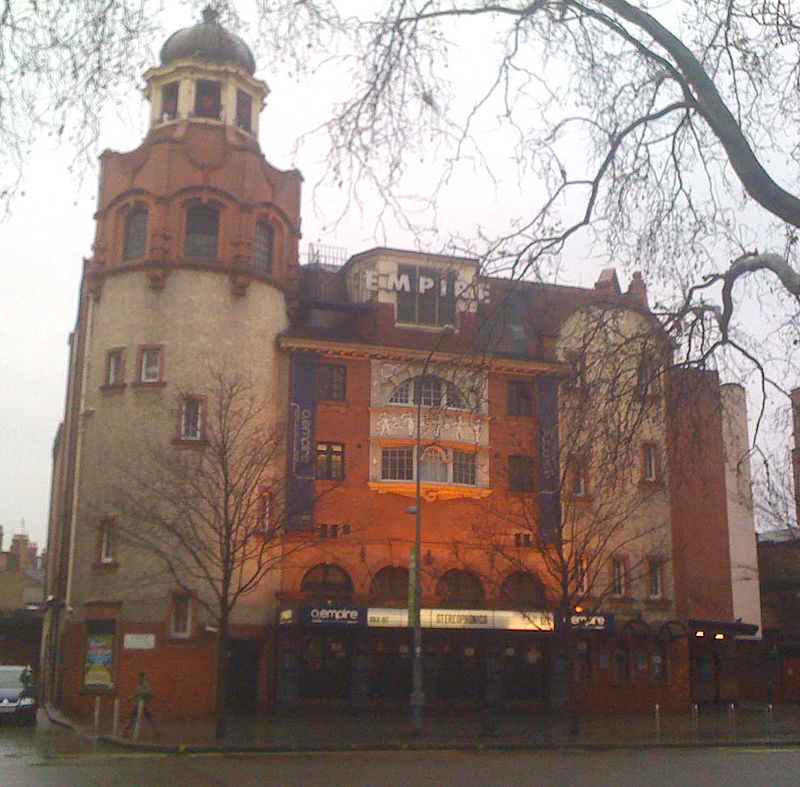
“Stageland and Thereabouts” feature. Lily photographed at the Shepherd’s Bush Empire — a recognised face of the Edwardian halls.

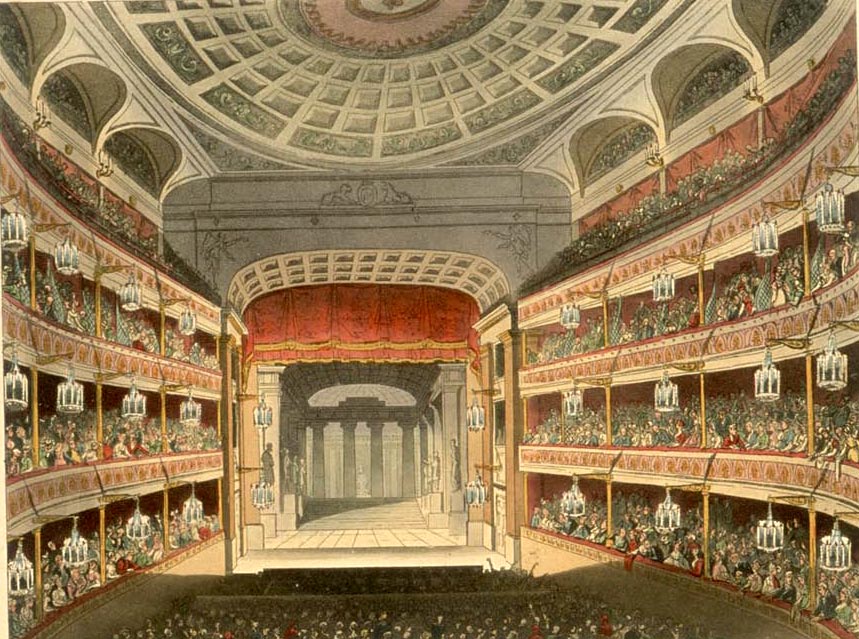
Royal Opera House Covent Garden

c. 1810

Royal Opera House, Covent Garden

Interior view of the great theatre of the era in which Richard Flexmore performed — the world from which the Flexmore tradition emerged.

Empire Theatre Shepherd's Bush

Shepherd’s Bush, London

Empire Theatre, Shepherd’s Bush

Where Lily was photographed for Reynolds’s Newspaper in June 1911. The building still stands today.

Leaving for South Africa 1897

4 December 1897

Leaving for South Africa

Press notice of Lily’s departure for Johannesburg — her first international engagement, aged eighteen.

Variety Hall North London 1897

22 January 1897

Variety Hall, North London

Five BLFC members on the programme. Lily performed a song and dance and was encored by the audience.

Alhambra Theatre Varieties Poster 1898

1898

Alhambra Theatre of Varieties

Programme cover for the Alhambra, General Manager Alfred Moul. Lily billed as “The Champion Acrobatic Dancer of the World.”

Alhambra Hull April 1898

1 April 1898

Alhambra, Hull

“Just returned from South Africa, and a tremendous success.” Agent: R. Voss.

Collins Music Hall Islington 1900

7 April 1900

Collins’s Music Hall, Islington

Lily on the bill with T.E. Dunville, Lily Morris and Mark Sheridan at the legendary Islington Green hall.

Shares Bill with Lily Langtry Blackpool 1900

1900

Sharing a Bill with Lily Langtry

Alhambra, Blackpool review: Lily Flexmore named alongside Lily Langtry as “serio, comedian and leg-mania artist.”

India Rubber Girl Bristol 1900

14 December 1900

“The India Rubber Girl” — Bristol

Bristol Music Hall review: “Lily Flexmore, the India rubber girl, gives a novel performance.”

Cork Opera House 1907

23 April 1907

Cork Opera House

Programme for Lily Flexmore’s appearance at the Cork Opera House, part of her extensive Irish touring.

Paris Spectacles Officiel April 1908

5–11 April 1908

Officiel Paris-Spectacles

The official Paris entertainments listings for the week — from the Opéra to the Grand Guignol. Lily was performing in Paris that year.

Berlin Wintergarten June 1908

9 June 1908

Berlin Wintergarten

Programme listing Lily Flexmore as “Akrobat. Tänzer” alongside the Trapnell Family and Therese Renz.

Berliner Tageblatt 1909

5 September 1909

Berliner Tageblatt

Masthead of the Berliner Tageblatt — one of Berlin’s leading papers, in whose pages Lily’s engagements were advertised.

Orpheum Circuit Poster

1908

Orpheum Circuit of Theatres

The iconic Orpheum Circuit poster. Lily toured 45 theatres across 36 American cities, billed as “The Extraordinary Girl.”

Orpheum Memphis March 1908

22 March 1908

Orpheum Theatre, Memphis

Memphis Orpheum advertisement: “Lily Flexmore — The Extraordinary Girl.” Performances twice daily.

Saugatuck Leap Year Ball 1908

February 1908

The Saugatuck Leap Year Ball

The young women of Saugatuck, Michigan chose Lily’s name alongside Ellen Terry and Anna Held for their anonymous invitations.

Marie Dressler Show Aldwych 1909

6 March 1909

Marie Dressler’s Show — Aldwych

“Lily Flexmore, the little dancer, was given special mention in the reviews” — singled out amid a major company.

Le Figaro Marigny Paris 1909

27 August 1909

Le Figaro — Théâtre Marigny

Le Figaro: “A Marigny: Miss Lily Flexmore, the flexible girl” — listed alongside Ida Rubinstein at the Olympia.

Wounded Soldiers Palace Theatre 1917

October 1917

Wounded Soldiers — Palace Theatre

Benefit performance for 600–700 wounded soldiers from the Reading War Hospitals. Lily gave her services voluntarily.

Reynolds Newspaper Stageland June 1911

26 June 1911

Reynolds’s Newspaper

“Stageland and Thereabouts” feature. Lily photographed at the Shepherd’s Bush Empire — a recognised face of the Edwardian halls.

Royal Opera House Covent Garden

c. 1810

Royal Opera House, Covent Garden

Interior view of the great theatre of the era in which Richard Flexmore performed — the world from which the Flexmore tradition emerged.

Empire Theatre Shepherd's Bush

Shepherd’s Bush, London

Empire Theatre, Shepherd’s Bush

Where Lily was photographed for Reynolds’s Newspaper in June 1911. The building still stands today.

George Ambrose White

The man behind the name Flexmore

George — Origins & Family

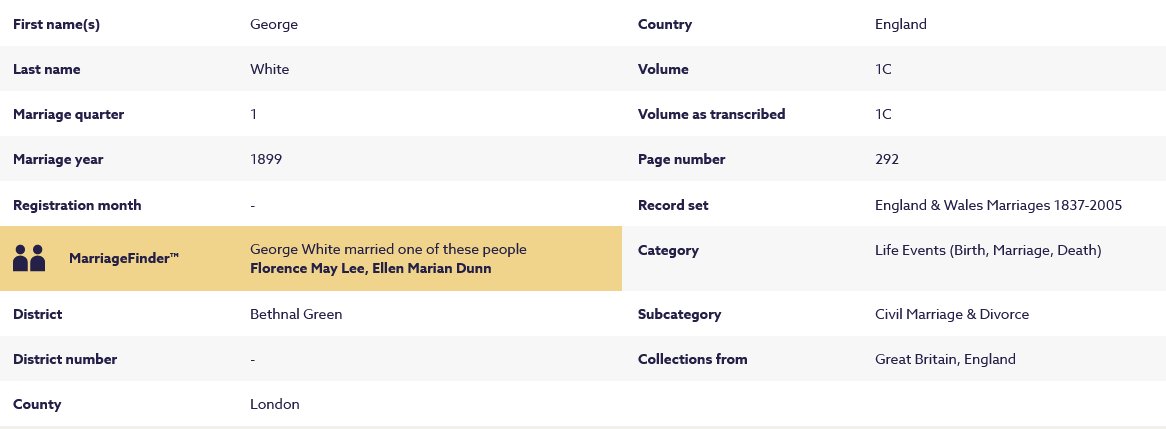
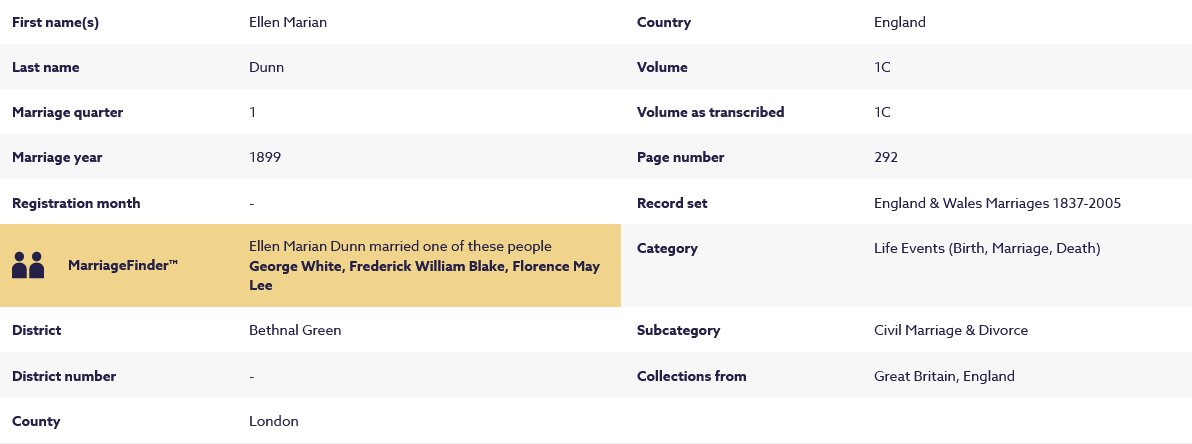
Ellen Dunn married George Ambrose White, a professional comedian, in Bethnal Green on 27th February 1899 — two days after Ellen's twentieth birthday. George was born on 14th March 1877 at 23 Goswell Terrace, Clerkenwell, the son of Robert William White, a porter, and Maria, formerly Ridley. He was baptised on 6th May 1877 at St. Thomas Charterhouse, Finsbury. He performed professionally as George Flexmore.

George had five younger siblings — a sister Eliza, and brothers Richard, Thomas, Alfred John and James Ernest — all born in Walthamstow, where the family moved after his early childhood in Clerkenwell. By 1891 the family was living at 11 Westbourne Terrace, Hackney, next door to the Ridley family — George's maternal grandparents, Joseph Ridley and Elizabeth Ann Eveleigh.

Alongside his stage career as George Flexmore, George built a successful professional life as a Newspaper Representative for Associated Newspapers and The Evening News, based at Carmelite House, Blackfriars, London EC4 — the grand headquarters of the Associated Newspapers group. He was, by all accounts, widely respected and personally popular in the newspaper world, as the extraordinary turnout at his funeral would later demonstrate.

At the time of his marriage, George was living at 150 Glyn Road, Hackney. Ellen was at 106 Royston Street, Bethnal Green. The wedding took place at Bethnal Green Register Office on 27th February 1899. The witnesses were Ellen's parents, John and Ellen Dunn. The officiating officers were Joseph Jacobs, Registrar, and D. Thomas, Superintendent Registrar.

Civil Birth Record George Ambrose White 1877

Civil Birth Record · George Ambrose White · 14th March 1877

Baptism Record George Ambrose White 1877

Baptism Record · George Ambrose White · 6th May 1877 · St. Thomas Charterhouse, Finsbury

Civil Marriage Record Q1 1899 Bethnal Green

Civil Marriage Record · Q1 1899 · Bethnal Green

Civil Marriage Record Ellen Marian Dunn January 1899

Civil Marriage Record · Ellen Marian Dunn · January 1899

The Tragedy of Birmingham — July 1899

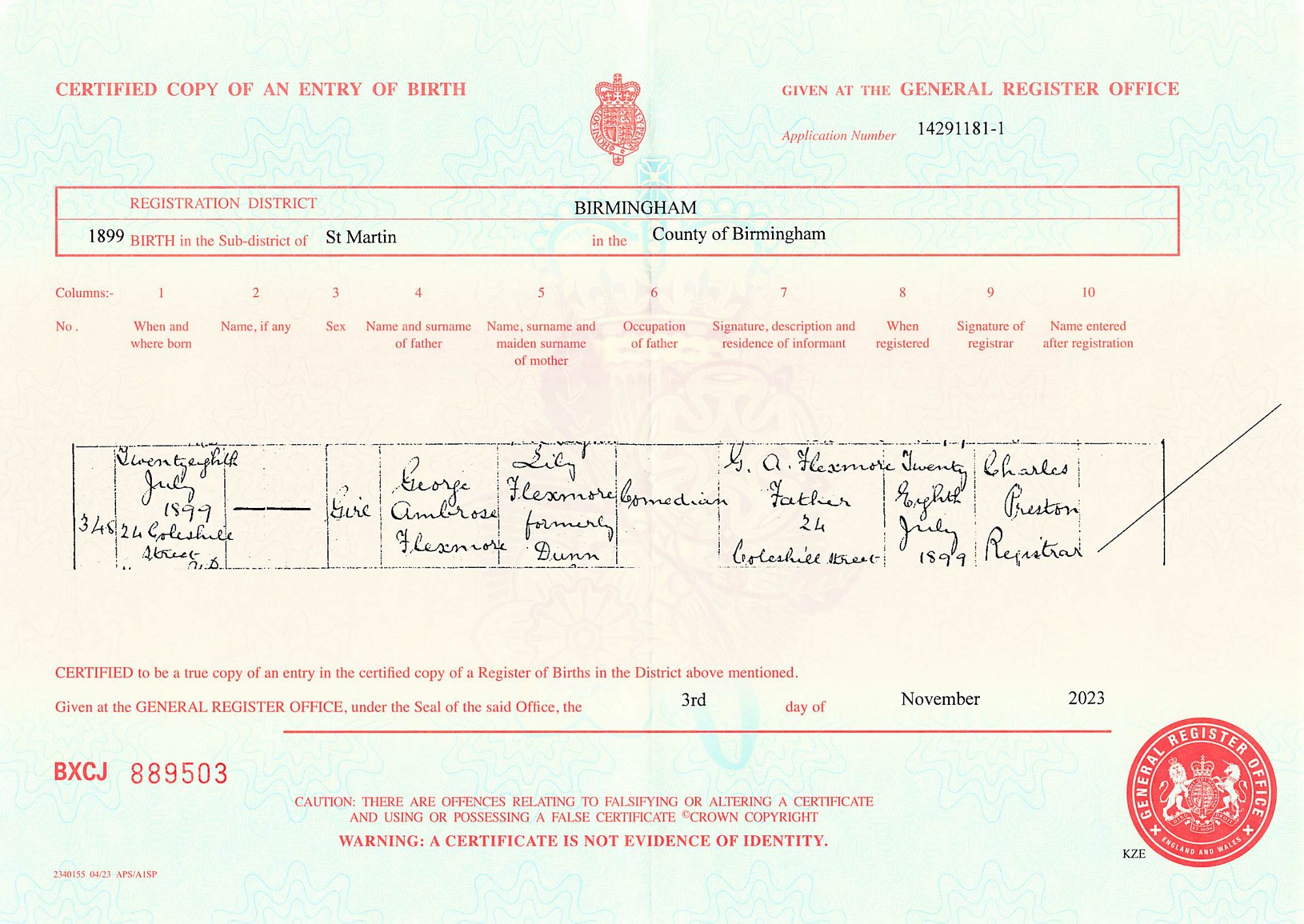
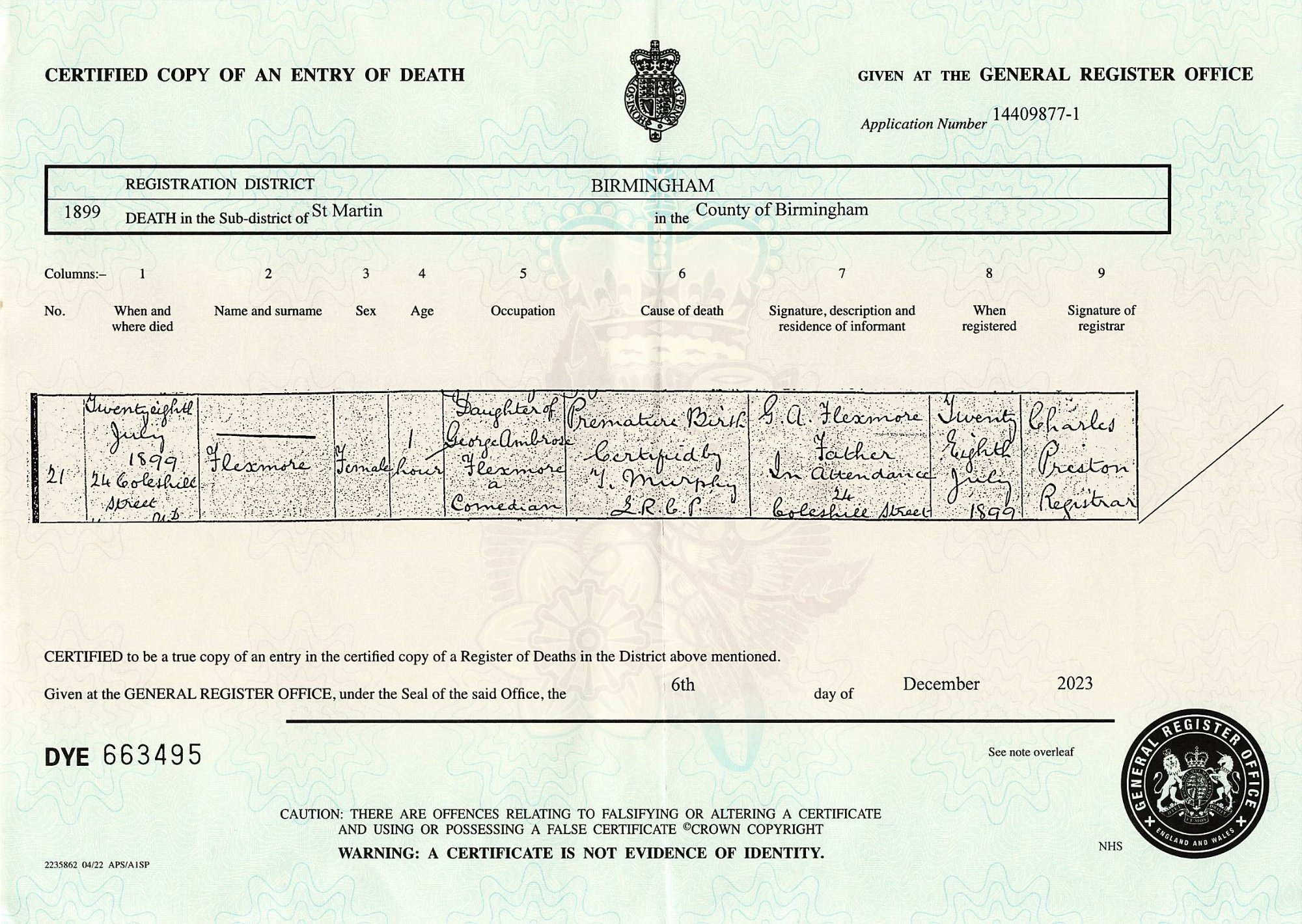
On 28th July 1899, while performing in Birmingham and staying at 24 Coleshill Street, Ellen gave birth to a premature baby girl. The infant survived for just one hour and did not receive a name. The birth certificate records the child simply as “Female Flexmore,” daughter of George Ambrose Flexmore, Comedian, and Lily Flexmore, formerly Dunn. This heartbreaking document is one of the most poignant records in Ellen's story.

Birth Certificate Female Flexmore 1899

Birth Certificate · Female Flexmore · 28th July 1899 · Birmingham · GRO

Death Certificate Female Flexmore 1899

Death Certificate · Female Flexmore · 28th July 1899 · Premature Birth · GRO

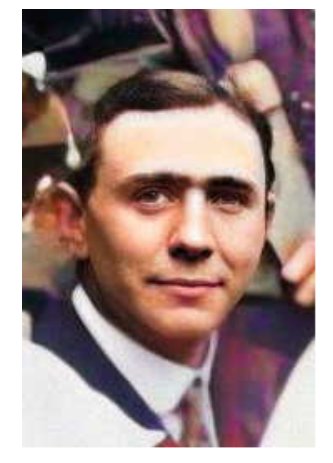
George Ambrose White Comedian

George Ambrose White · Comedian · known as George Flexmore

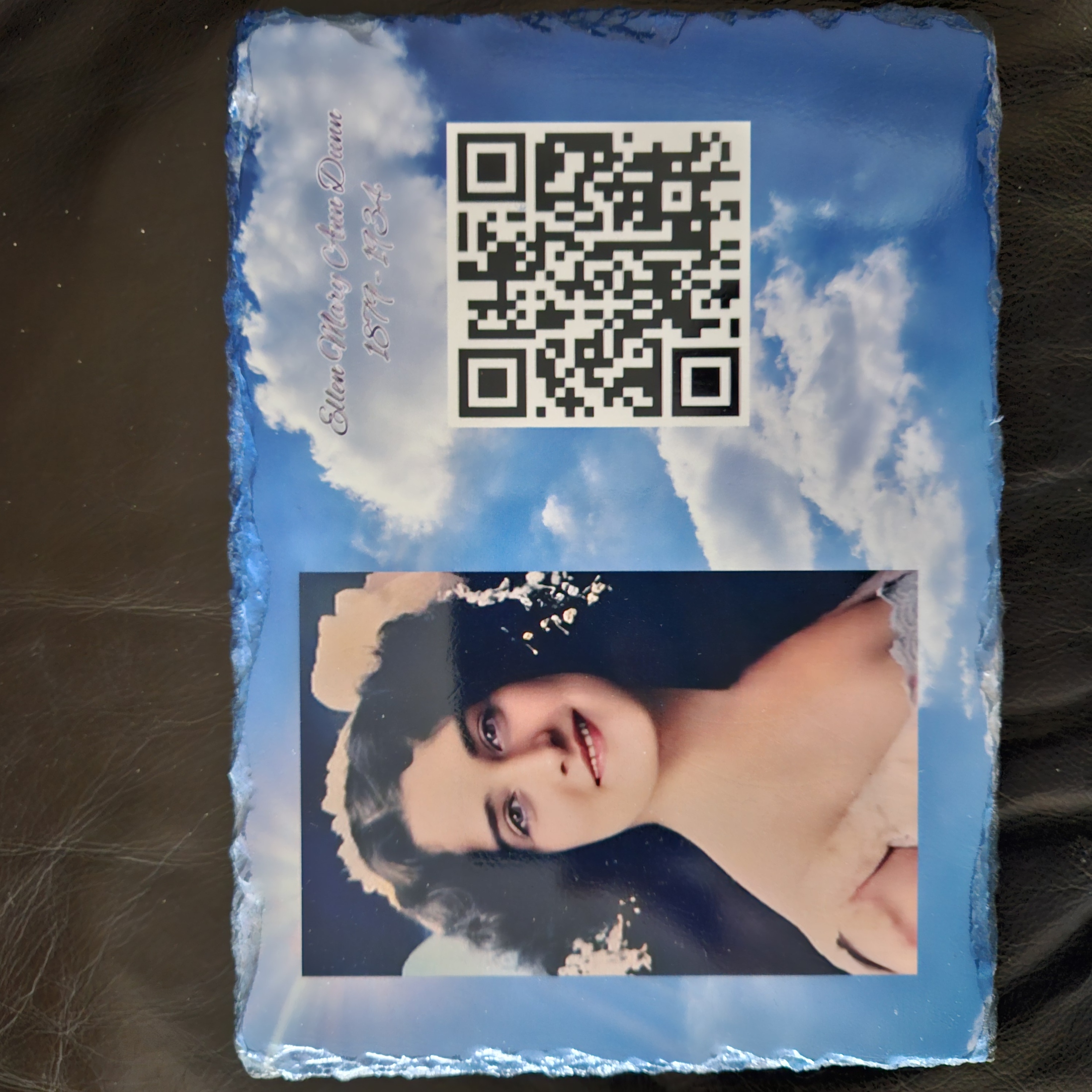
Ellen Mary Ann Dunn Colourised Portrait

Ellen Mary Ann Dunn · Colourised Portrait · Image courtesy of Ms Jill Adams

Colebrooke Row — Their Home

From at least 1918 through to the end of their lives, George and Ellen made their home at Colebrooke Row, Islington — a gracious Georgian terrace overlooking the New River Walk, a short stroll from the Regent's Canal. The street retains much of its original character to this day. On the 1921 Census, which George signed himself, he added the words ‘Trading as George Flexmore’ beside his signature — a quiet insistence, even on an official document, on the name he had made his own.

George's Family Tree

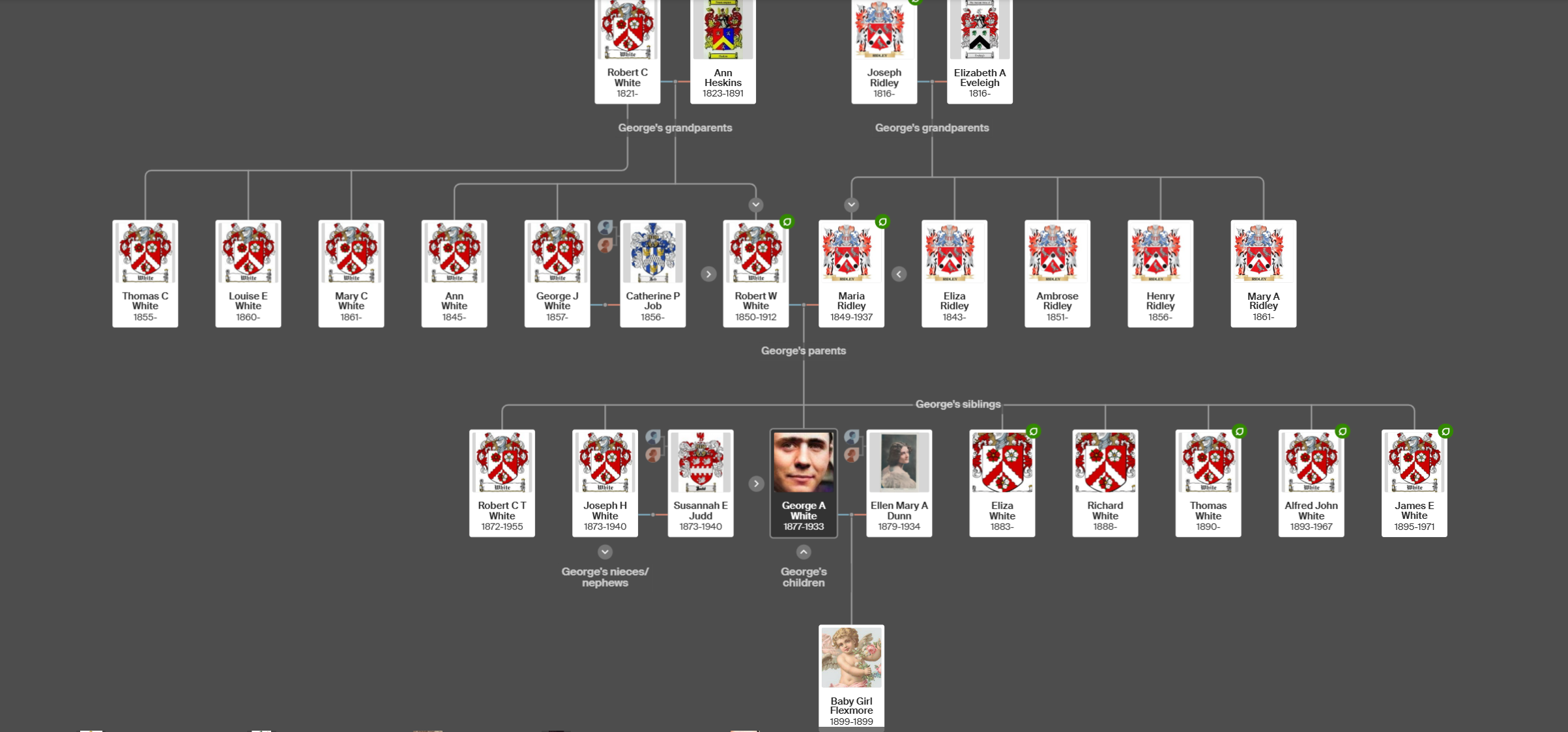
The image below shows the Ancestry.co.uk family tree for George Ambrose White, tracing his lineage from his grandparents — Robert C. White & Ann Heskins, and Joseph Ridley & Elizabeth Ann Eveleigh — through his parents Robert William White and Maria Ridley, and on to George himself, his wife Ellen Mary Ann Dunn, and their daughter Baby Girl Flexmore (1899–1899).

George Ambrose White Family Tree — Ancestry.co.uk

George Ambrose White · Ancestry.co.uk Family Tree · Showing grandparents, parents, siblings, wife Ellen Mary Ann Dunn, and Baby Girl Flexmore (1899–1899)

🌳   View George's Ancestry Family Tree   →
The Death of George

George Ambrose White died very suddenly at St. Bartholomew's Hospital, London, on Tuesday, 26th September 1933, aged fifty-five. The cause of death was mesenteric thrombosis, certified by post-mortem. A postmortem was carried out on the same day.

His funeral took place on Monday, 2nd October 1933, at Islington Cemetery, Finchley. The Islington and Holloway Press reported the occasion under the headline 40 Newspaper Vans Follow Funeral. George was described as a West End Representative of the Evening News (circulation department). Among the principal mourners were his widow Ellen, his mother Maria, and his brother Robert. Floral tributes came from Associated Newspapers Ltd., the West End Newsvendors’ Association, the Publishing Association, the Independence Club, and many colleagues and personal friends. The funeral was arranged by Messrs. H.M. Repuke of Islington Green.

He left his estate of £125 to Ellen. Administration was granted to Ellen Mary Ann White, widow, on 22nd November 1933.

📄 george_death_cert.jpg — Official Death Certificate · George Ambrose White · 26 September 1933 · St. Bartholomew's Hospital · GRO

Official Death Certificate · George Ambrose White · 26th September 1933 · St. Bartholomew's Hospital, London · GRO Certified Copy

Timeline

From Peerless Street to Islington Cemetery · 1879–1934

25 February 1879

Born in Peerless Street, Islington

Ellen Mary Ann Dunn is born at 56 Peerless Street, Islington, St. Luke's — now the site of Moorfields Eye Hospital. Second of eleven children of John Dunn, shoemaker, and Ellen Mary Dunnell. Baptised 23 March 1879.

18 November 1884

Enrolled at Hammond Square Primary School

Five-year-old Ellen is enrolled at Hammond Square Primary School, Hoxton Street, London. She is thought soon after to have begun training in dance and gymnastics.

23 March 1895

Plays for the British Ladies Football Club

Aged sixteen, playing as Ruth Coupland, Ellen takes to the field at Crouch End Athletic Ground before a crowd of approximately ten thousand spectators. North London wins 7–1 against South London.

c. 1895

Begins performing as Lily Flexmore

Ellen adopts the stage name Lily Flexmore and embarks on a professional career as a dancer, acrobatic contortionist, singer and comedienne that will span nearly three decades.

22 January 1897

A Night to Remember — Wembley Park & the Variety Hall

Following a BLFC fixture at Wembley Park Cricket Ground, Ellen and several of her fellow players — Phoebe Smith, Marie Ennis, Violet Clarence, and Blanche Foxcroft — stage a variety show at a Variety Hall in North London. By all accounts it was an exceptional evening, not forgotten in a hurry.

c. 1897–1898

Performs in Johannesburg

At just eighteen years of age, Ellen travels to South Africa to appear at the Empire Theatre, Johannesburg — the beginning of an international career.

January 1899

Marries George Ambrose White, Bethnal Green

Ellen marries George Ambrose White, a professional comedian who performs as George Flexmore, in Bethnal Green. They will tour together and perform as a professional partnership.

28 July 1899

The Birmingham Tragedy

While performing in Birmingham and staying at 24 Coleshill Street, Ellen gives birth to a premature baby girl. The infant — recorded as “Female Flexmore” — lives for only one hour.

December 1907

Sails to New York aboard RMS Adriatic

Ellen and George sail from Southampton on 18th December 1907, arriving in New York on 27th December — spending Christmas Day at sea aboard the White Star Liner. Their fellow passenger included music hall comedian Whit Cunliffe, also bound for New York. The Adriatic's captain on this voyage was Edward John Smith — who would later command the RMS Titanic. From New York they travel on to Chicago for the Chicago Auditorium, before Ellen tours the USA on the Orpheum Theatre Circuit — 45 theatres across 36 American cities.

28 February 1908

Honoured at the Saugatuck Leap Year Ball

The young women of Saugatuck, Michigan choose Lily Flexmore's name — alongside Ellen Terry and Anna Held — as one of the famous artistes behind which they sign their anonymous invitations. Ellen has been in the USA barely a month.

1909

Paris and Berlin

Ellen appears at the Marigny Theatre in Paris, then at the Apollo Theatre, Berlin. Her international touring continues to expand.

November 1910

Strassburg and the Côte d'Azur

Ellen performs at the Union Theatre in Strassburg. In March 1912, she appears in Beausoleil, France, on the Côte d'Azur, just above Monaco.

1925

Final Known Performance

Ellen is documented performing her signature “Toe-In-Mouth” dance at the age of forty-six — the last known performance of a career spanning some thirty years.

26 September 1933

Death of George Ambrose White

George dies suddenly at St. Bartholomew's Hospital, London, aged 55, of mesenteric thrombosis. A procession of forty newspaper delivery vans follows his funeral cortege. He leaves £125 to Ellen.

19 January 1934

Death of Ellen Mary Ann Dunn

Just four months after the death of her husband, Ellen dies at St. Mary's Hospital (now Whittington Hospital), 77a Highgate Hill, Islington, aged 54. Cause of death: pneumococcal meningitis and acute primary pneumonia. Arrangements are handled by her brother Frederick Dunn.

25 January 1934

Buried at Islington Cemetery, Finchley

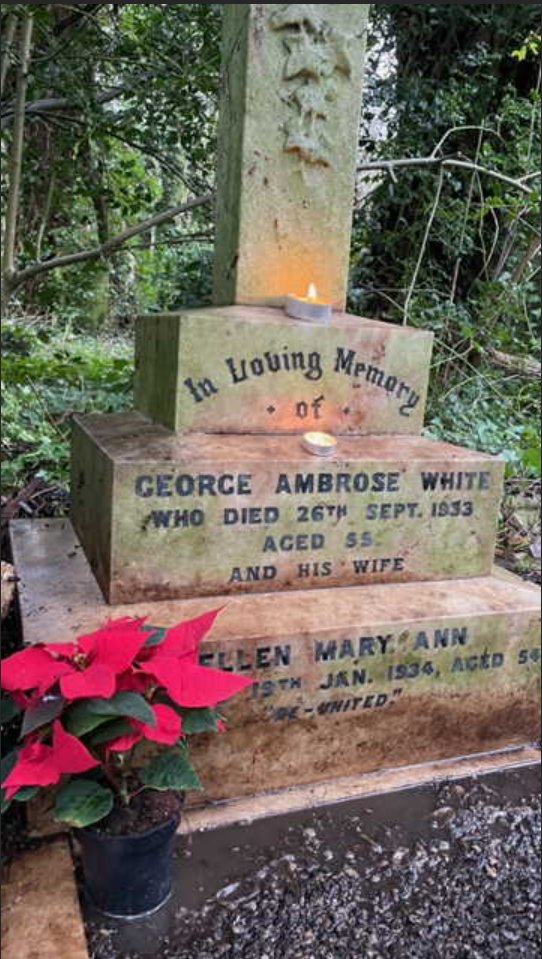
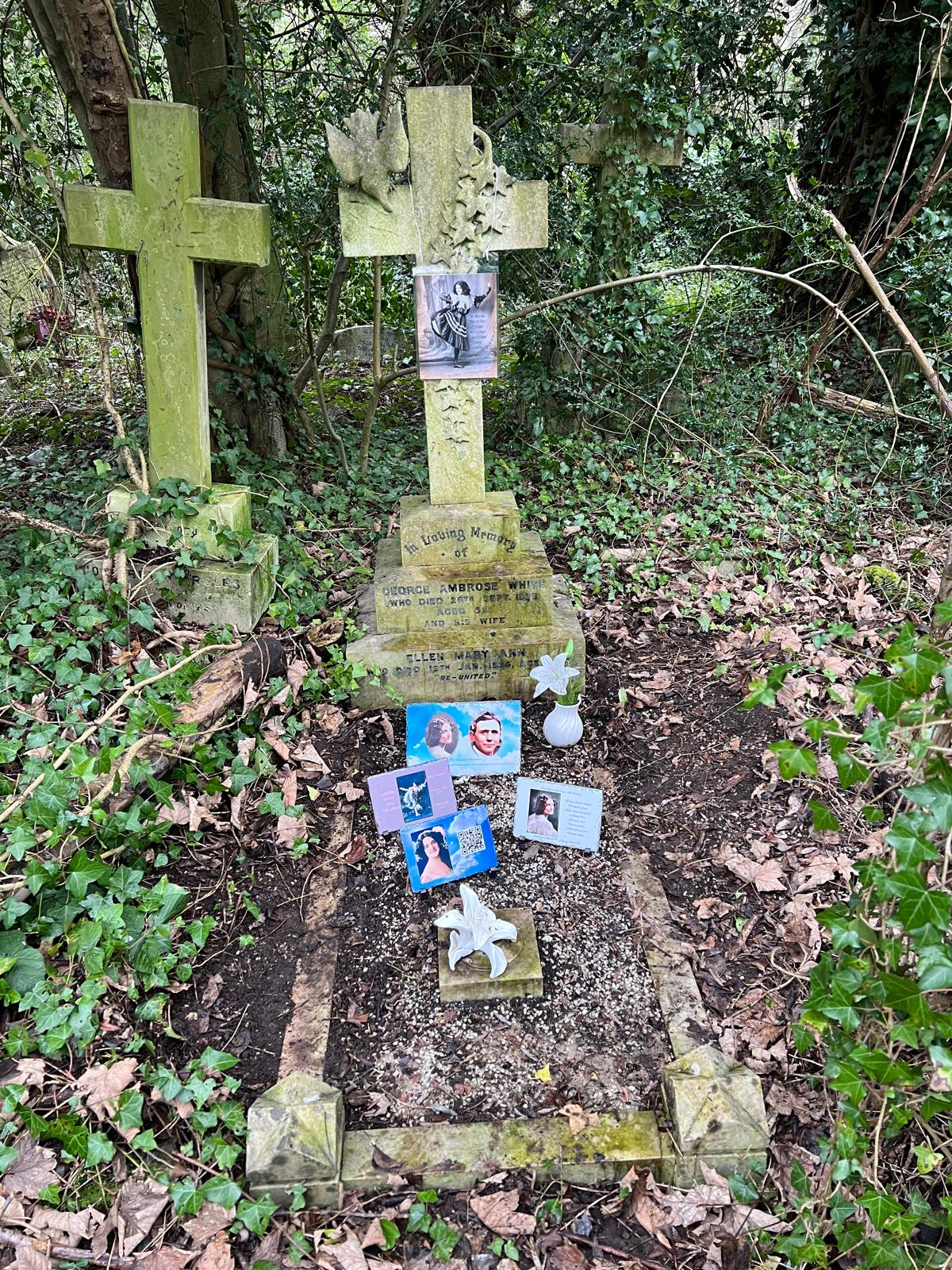
Ellen is interred at Islington Cemetery, Finchley, in the same plot as her husband: L/3/14781/P. The gravestone reads “Re-United.”

19 January 2023

In Memoriam, The Stage

The Stage magazine publishes an In Memoriam tribute to Ellen Mary Ann Dunn, finally giving her the public recognition she had long deserved.

At Rest

Buried together · Re-United · Plot L/3/14781/P

The Death of Ellen

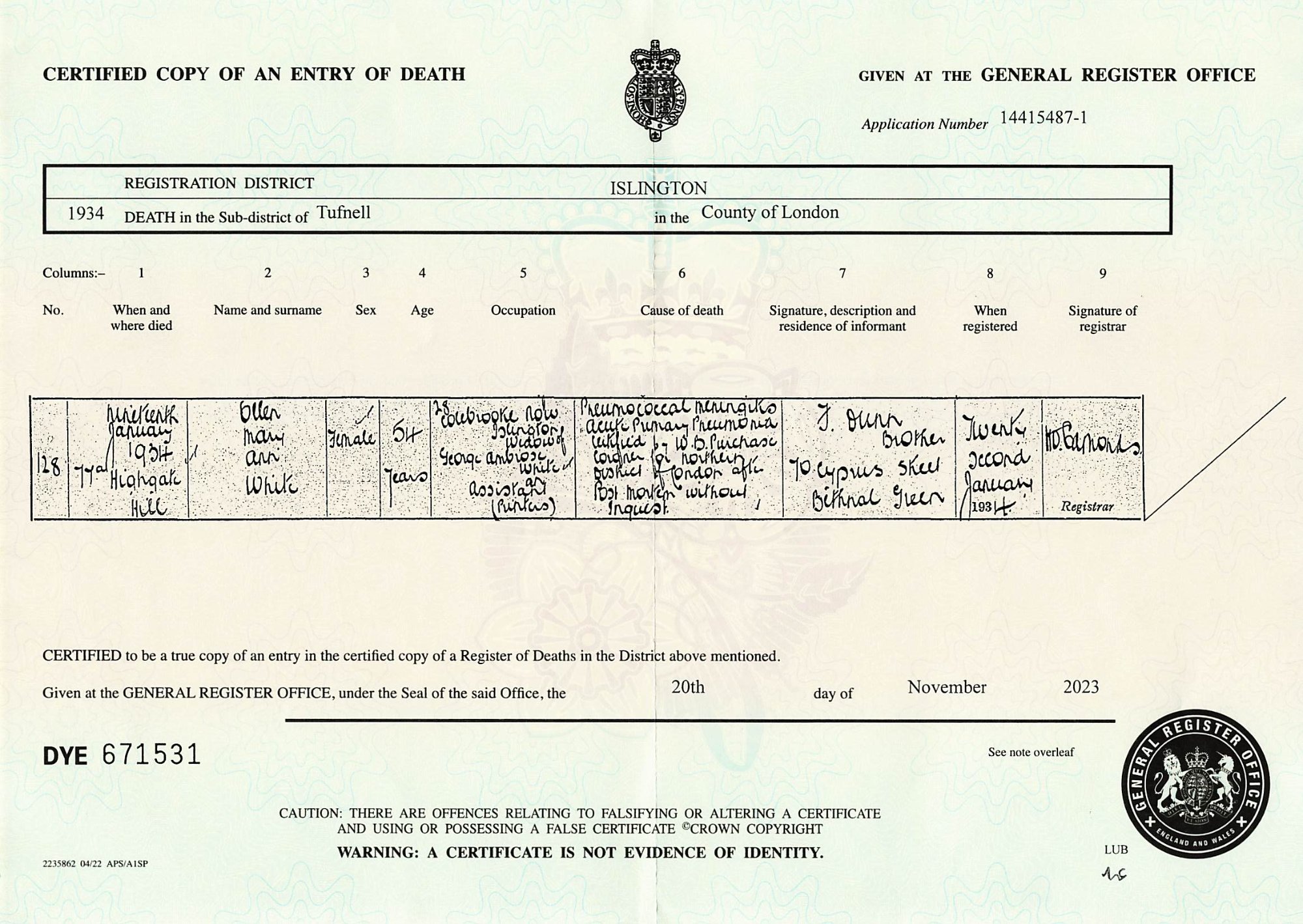
Just four months after the death of her husband, Ellen herself passed away. She died on Friday, 19th January 1934, at St. Mary's Hospital (now Whittington Hospital), 77a Highgate Hill, Islington, aged fifty-four. The cause of death was pneumococcal meningitis and acute primary pneumonia.

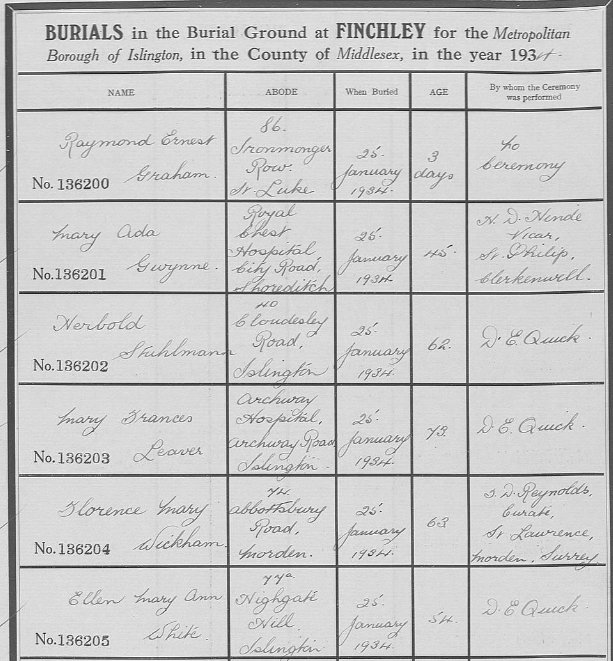
Arrangements were handled by Ellen's brother Frederick Dunn, of 70 Cyprus Street, Bethnal Green. Ellen was interred on 25th January 1934 at Islington Cemetery, Finchley, in the same plot as her husband — L/3/14781/P.

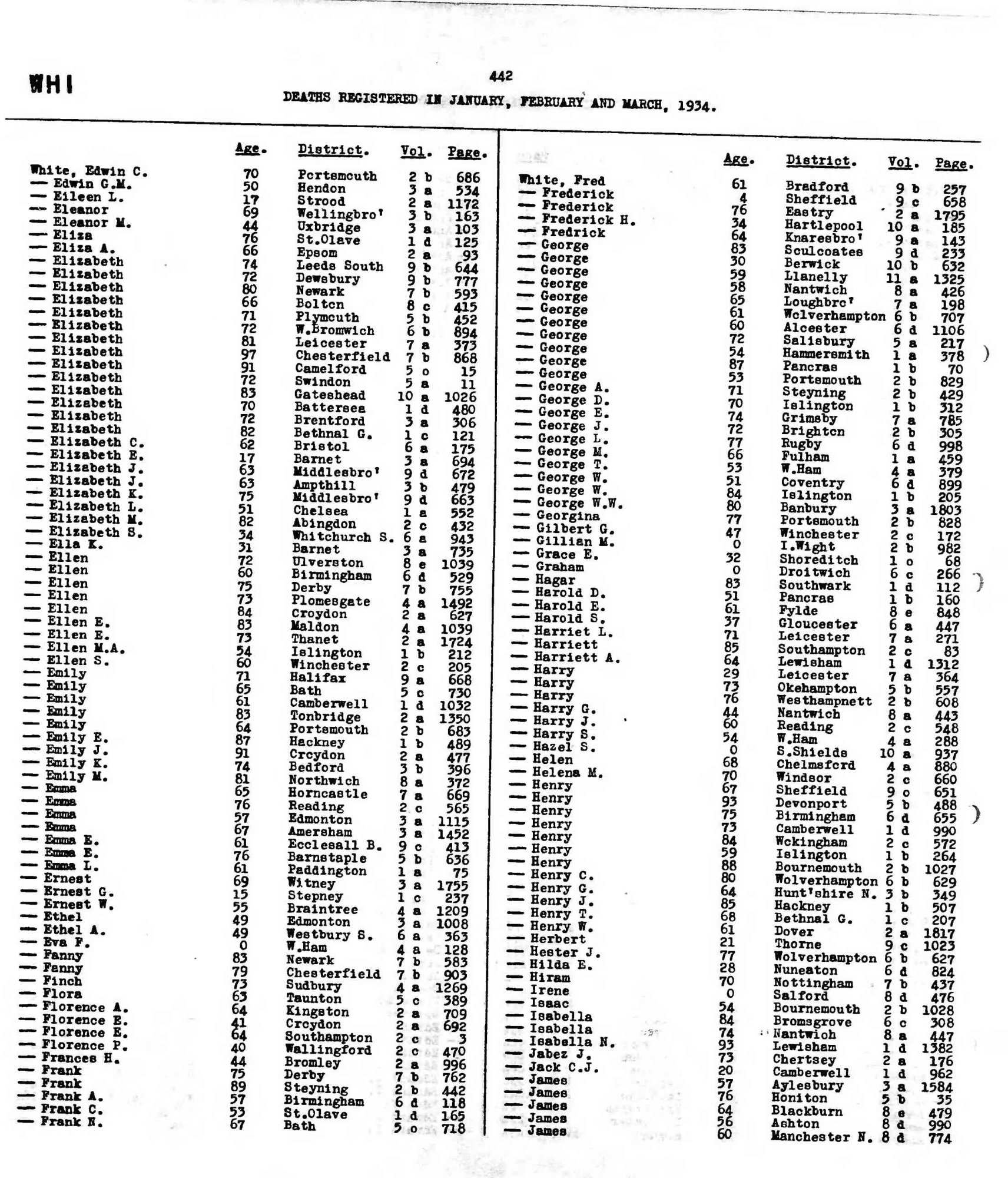
Civil Death Record Ellen Mary Ann Dunn White 1934

Civil Death Register · Ellen M.A. White · January 1934 · Islington District

Official Death Certificate Ellen Mary Ann Dunn White 1934

Official Death Certificate · Ellen Mary Ann White · 19 January 1934 · GRO

Burial Register Islington Cemetery Ellen Mary Ann White 1934

Burial Register · Islington Cemetery, Finchley · No. 136205 · Ellen Mary Ann White · 77a Highgate Hill, Islington · Buried 25th January 1934 · Aged 54

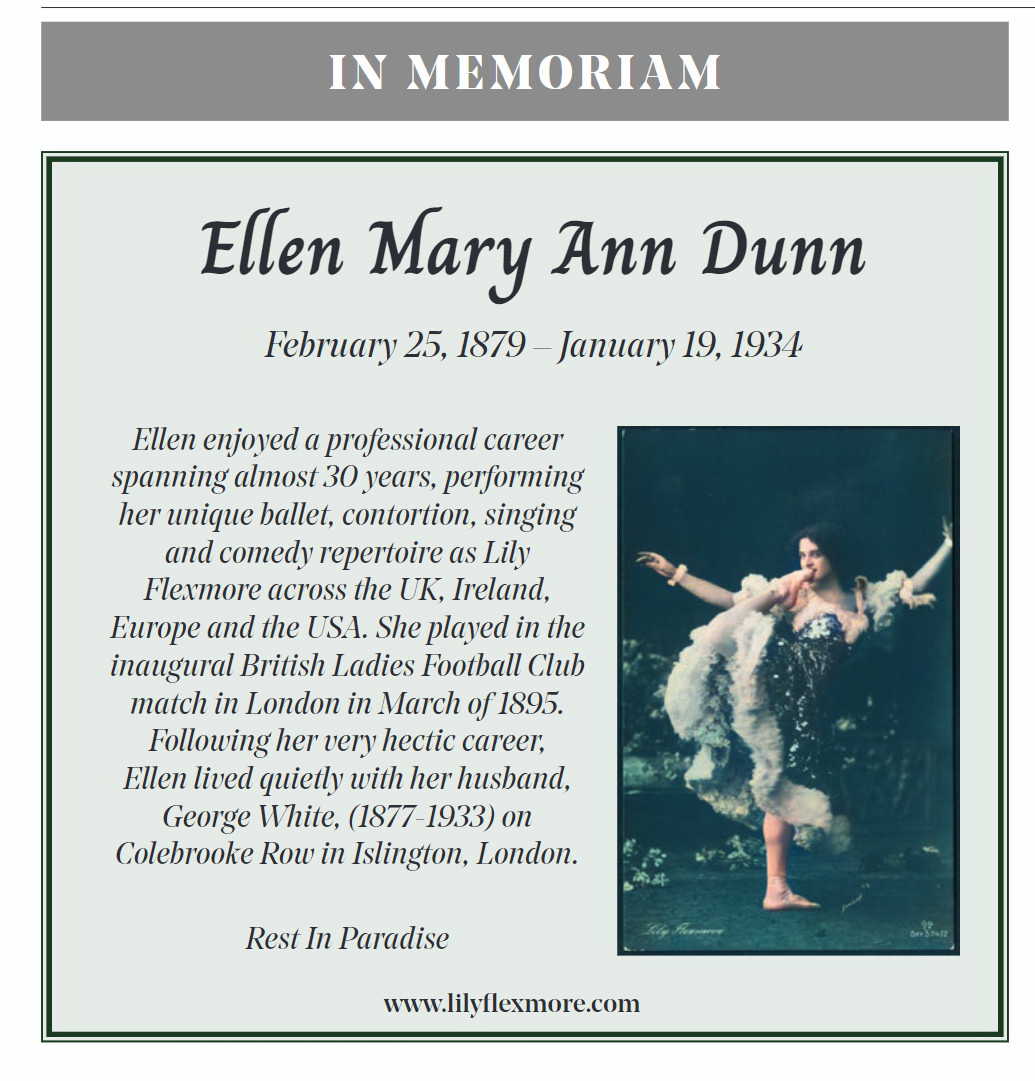
The Stage — In Memoriam

In January of 2023, with the kind permission of Ms Karen Wall, I placed an In Memoriam tribute in The Stage magazine. I wanted it to coincide with the 90th anniversary of Ellen's passing. Ellen had featured many times in this magazine during her career.

In Memoriam Ellen Mary Ann Dunn The Stage January 2023

In Memoriam · Ellen Mary Ann Dunn · 25 February 1879 – 19 January 1934 · Published in The Stage magazine · 19 January 2023

Islington Cemetery, Finchley

George Ambrose White

14 March 1877   ·   26 September 1933

Ellen Mary Ann White

25 February 1879   ·   19 January 1934

Re-United

Plot L/3/14781/P

Grave of Ellen Mary Ann Dunn and George Ambrose White Islington Cemetery

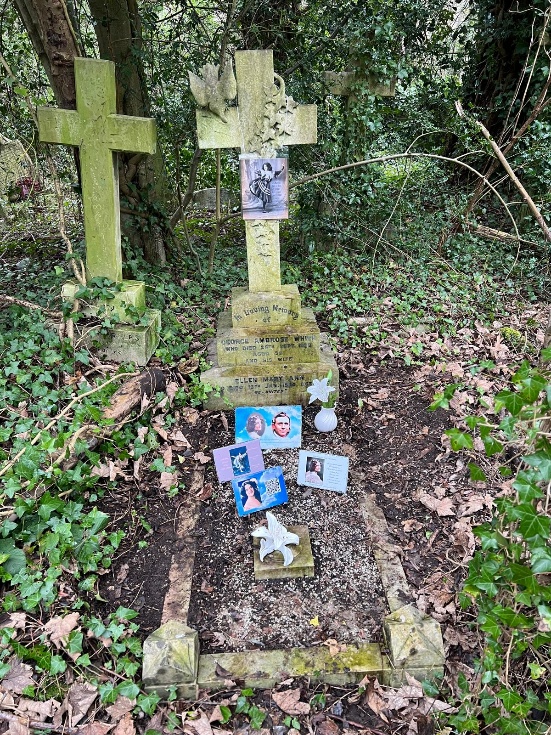
George Ambrose White & Ellen Mary Ann · “Re-United” · Islington Cemetery, Finchley · Plot L/3/14781/P · Image courtesy of Ms Karen Wall

Grave of Ellen and George with tributes January 2025

The grave of Ellen & George with portraits and tributes laid in their memory · January 2025 · Image courtesy of Ms Karen Wall

✦   Finding the Grave   ✦

Directions to the Graveside

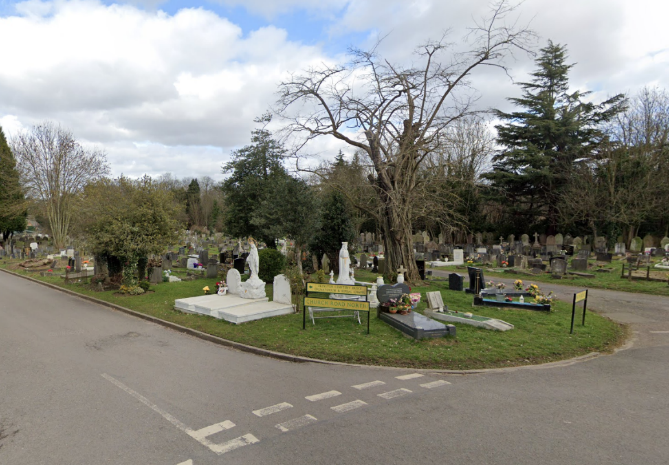
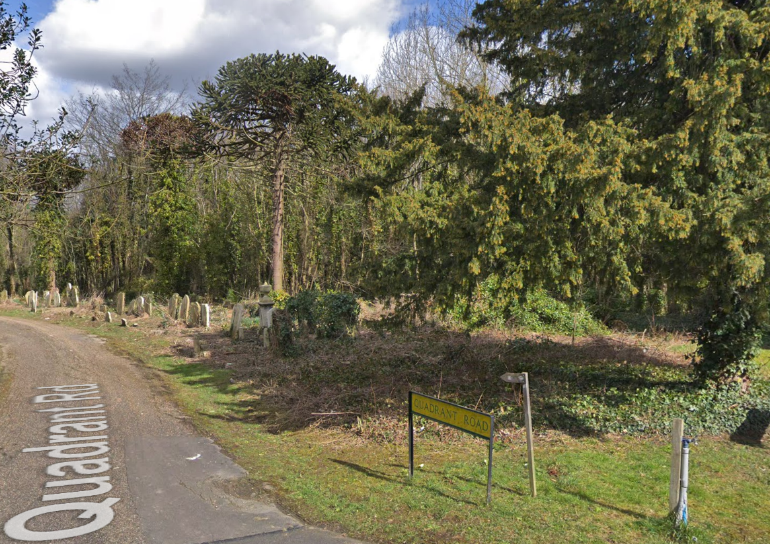
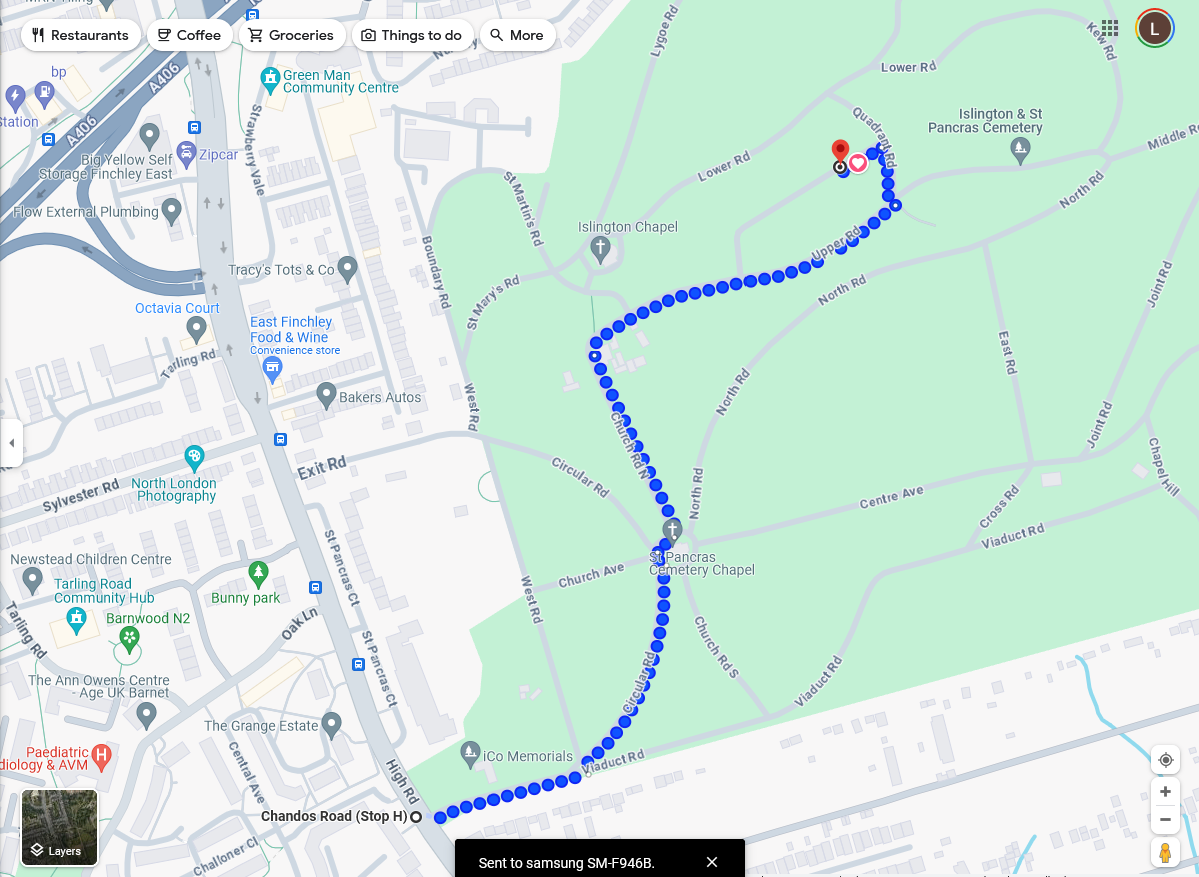
Ellen and George are interred in Islington Cemetery, High Road, East Finchley, London N2 9AG — Plot L/3/14781/P, located on Central Road. The distance from the High Road main gate to the grave is approximately 800 metres, along good flat tarmac surfaces throughout. There is a water tap at the junction of Upper Road and Quadrant Road, close to the grave — so only empty containers need be carried for flowers. Most of the roadways are wide enough to drive on; beware of almost silent electric vehicles.

Islington and St Pancras Cemetery map showing best route to grave

Islington & St. Pancras Cemetery — Map showing the recommended route to Plot L/3/14781/P

✦   Step by Step   ✦

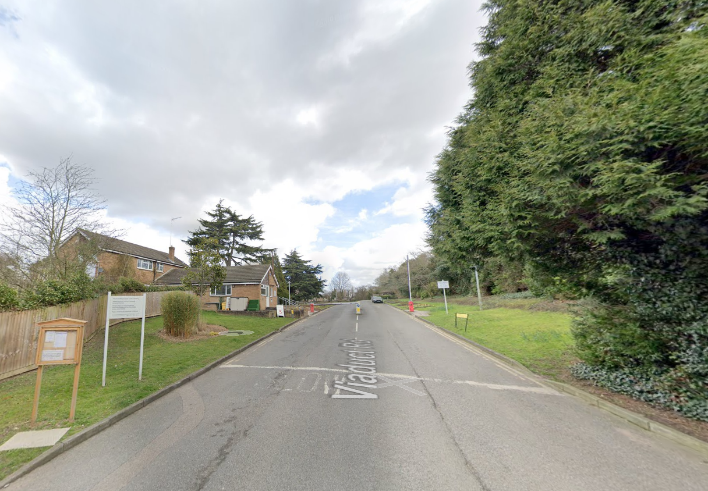
Step 1

Enter from the High Road Main Gate, which leads directly onto Viaduct Road. Follow Viaduct Road straight into the cemetery.

Viaduct Road leading into Islington Cemetery

Viaduct Road leading into the cemetery

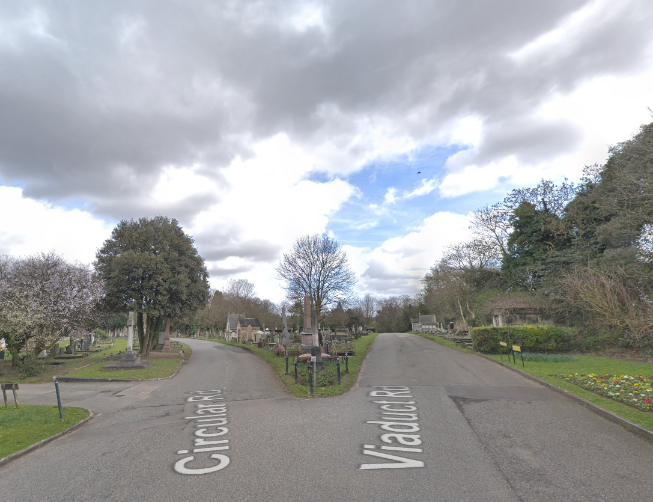
Step 2

Veer left from Viaduct Road onto Circular Road.

Junction where Viaduct Road meets Circular Road

Veer left from Viaduct Road onto Circular Road

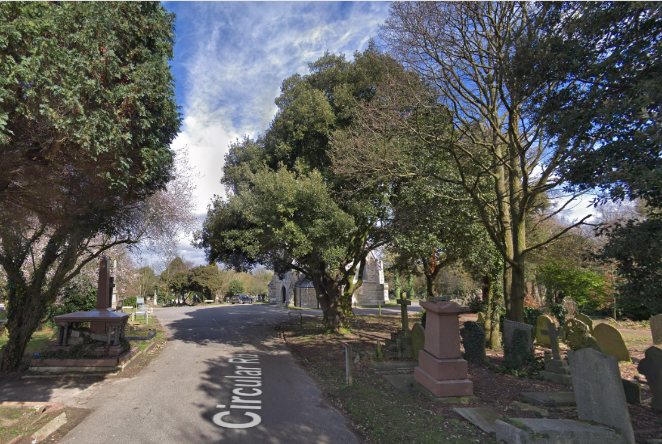
Step 3

Follow Circular Road as it approaches St. Pancras Cemetery Chapel.

Circular Road approaching St Pancras Cemetery Chapel

Circular Road approaching St. Pancras Cemetery Chapel

Step 4

Passing the Chapel, take Church Road Northnot North Road. Church Road North leads to the Administration Offices and on to Upper Road.

Church Road North leaving the Chapel

Church Road North leaving the Chapel — not North Road

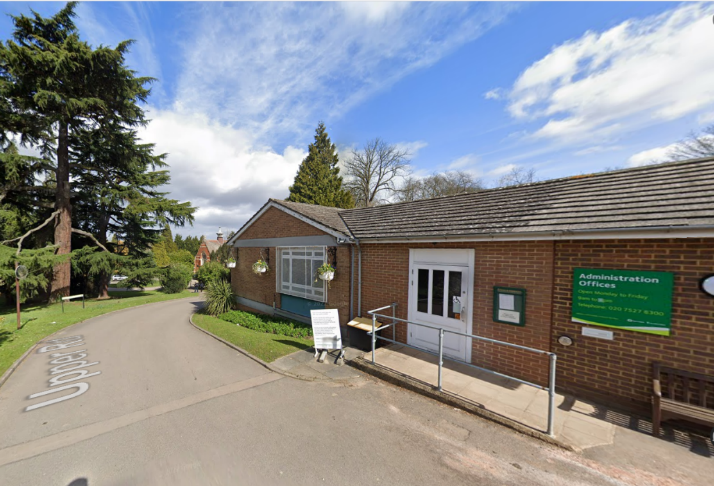
Step 5

Church Road North ends at the Administration Offices, where Upper Road begins. Continue straight ahead.

Administration Offices where Upper Road begins

Church Road North ends at the Admin Offices — Upper Road begins here

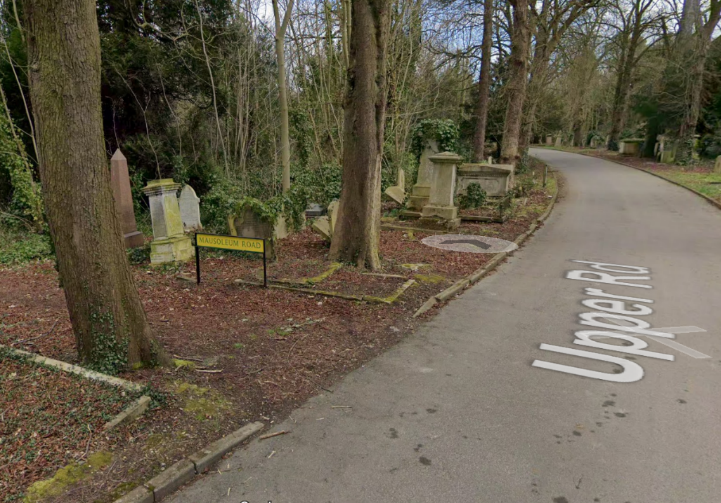
Step 6

Continue along Upper Road, bypassing Mausoleum Road.

Upper Road bypassing Mausoleum Road

Continue along Upper Road, bypassing Mausoleum Road

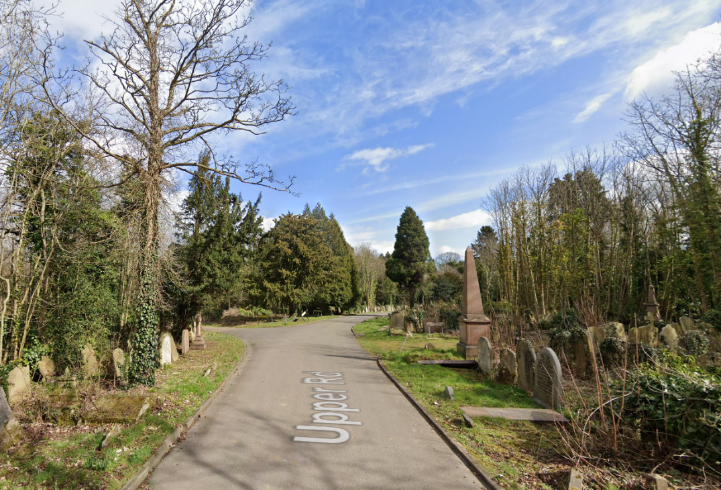
Step 7

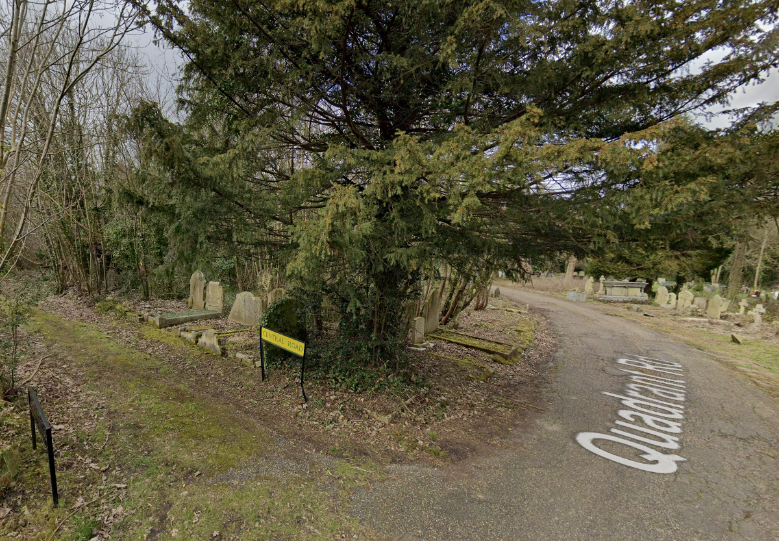
Follow Upper Road as it approaches Quadrant Road on the left. Almost there.

Upper Road approaching Quadrant Road

Upper Road approaching Quadrant Road on the left

Step 8

Turn left onto Quadrant Road. Note the water tap close to the signpost on the corner — useful for filling containers for flowers.

Quadrant Road with water tap near signpost

Quadrant Road begins — water supply close to signpost

Step 9

Turn left onto Central Road. The grave is on the right-hand side, approximately 10 metres along, set back from the path by about 5–6 metres.

Turn left onto Central Road

Turn left onto Central Road — the grave is 10 metres along on the right

✦   You have arrived   ✦

The grave of Ellen Mary Ann Dunn and George Ambrose White

Ellen & George — Re-United and Resting in Paradise.

In Memoriam

Remembering Ellen Mary Ann Dunn · 90 years on

In January of 2023, with the kind permission of Ms Karen Wall, I placed an In Memoriam tribute in The Stage magazine. I wanted it to coincide with the 90th anniversary of Ellen's passing. Ellen had featured many times in this magazine during her career.

✦   Ellen Mary Ann Dunn

25 February 1879 – 19 January 1934

Peerless Street, Islington  ·  Highgate Hill, Islington

Footballer · Dancer · Acrobatic Contortionist · Comedienne
Known on stage as Lily Flexmore
Beloved wife of George Ambrose White

The Stage was the leading weekly newspaper of the British entertainment industry, founded in 1880 — just one year after Ellen's birth. That she featured in its pages many times during her long career is a testament to the prominence she achieved on the Victorian and Edwardian music hall circuit.

In Memoriam Ellen Mary Ann Dunn The Stage January 2023

In Memoriam · Ellen Mary Ann Dunn · Published in The Stage magazine · 19 January 2023 · 90th anniversary of her passing

The Stages of Lily Flexmore

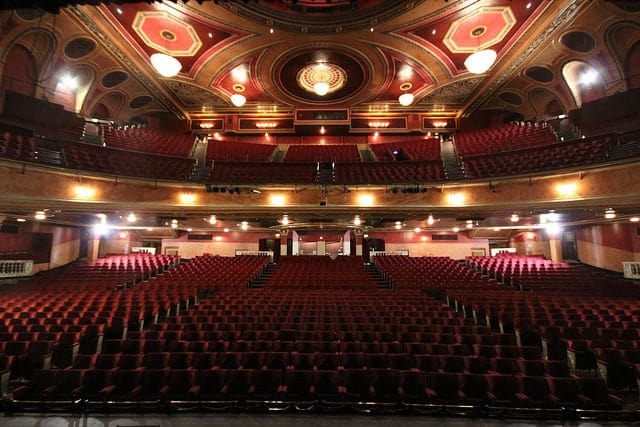
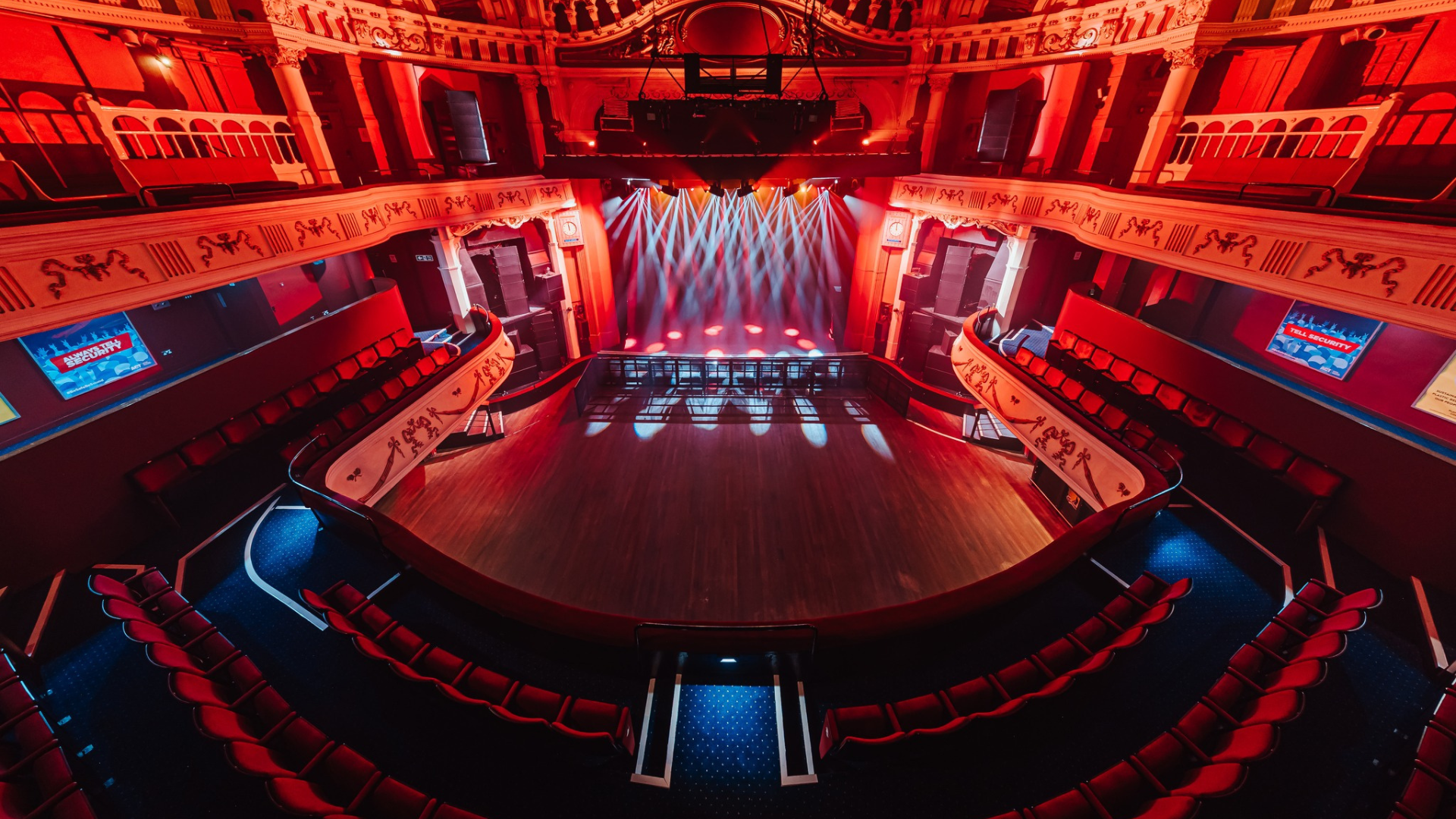
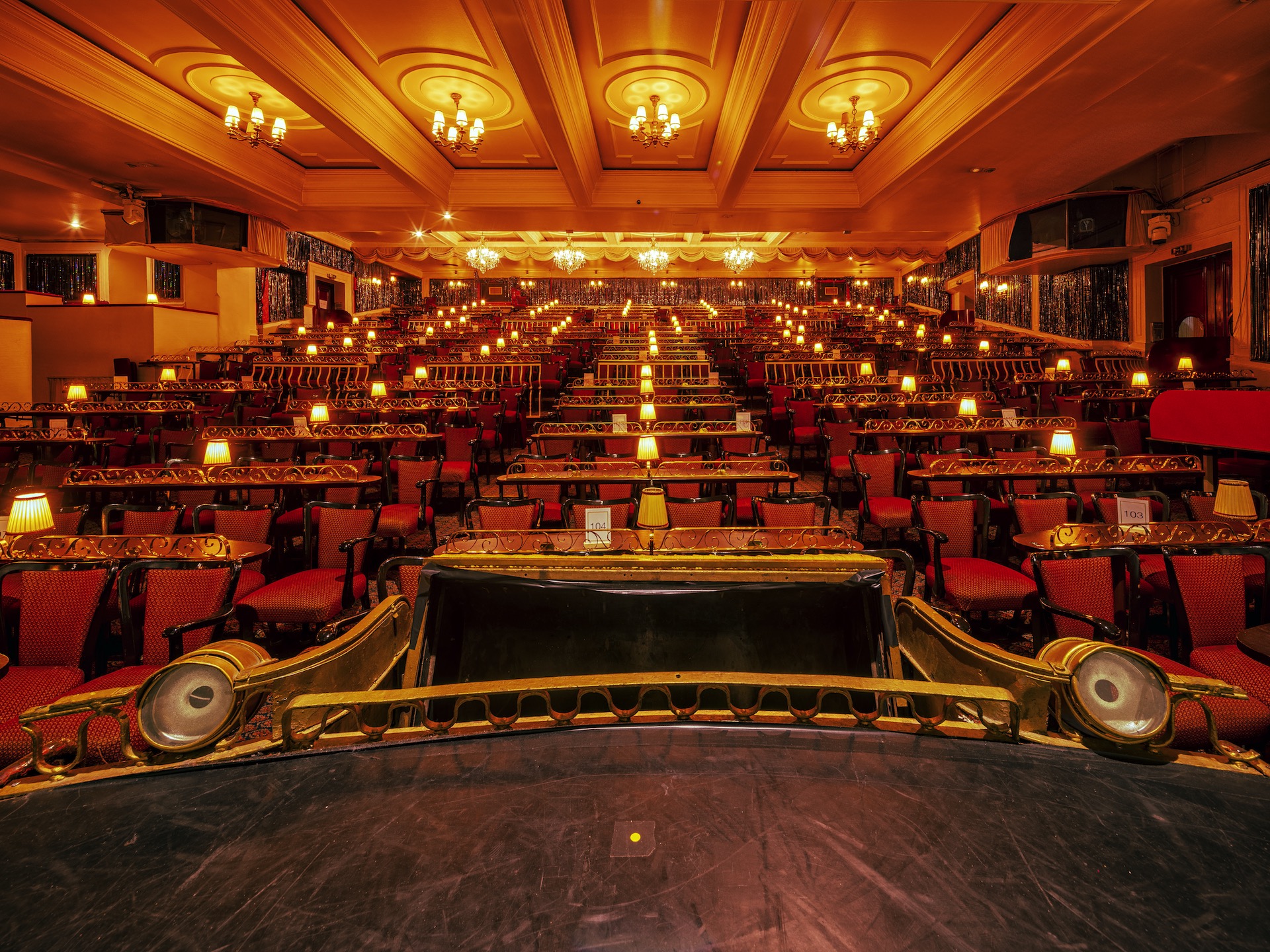
Some of the theatres and venues where Ellen Mary Ann Dunn performed.

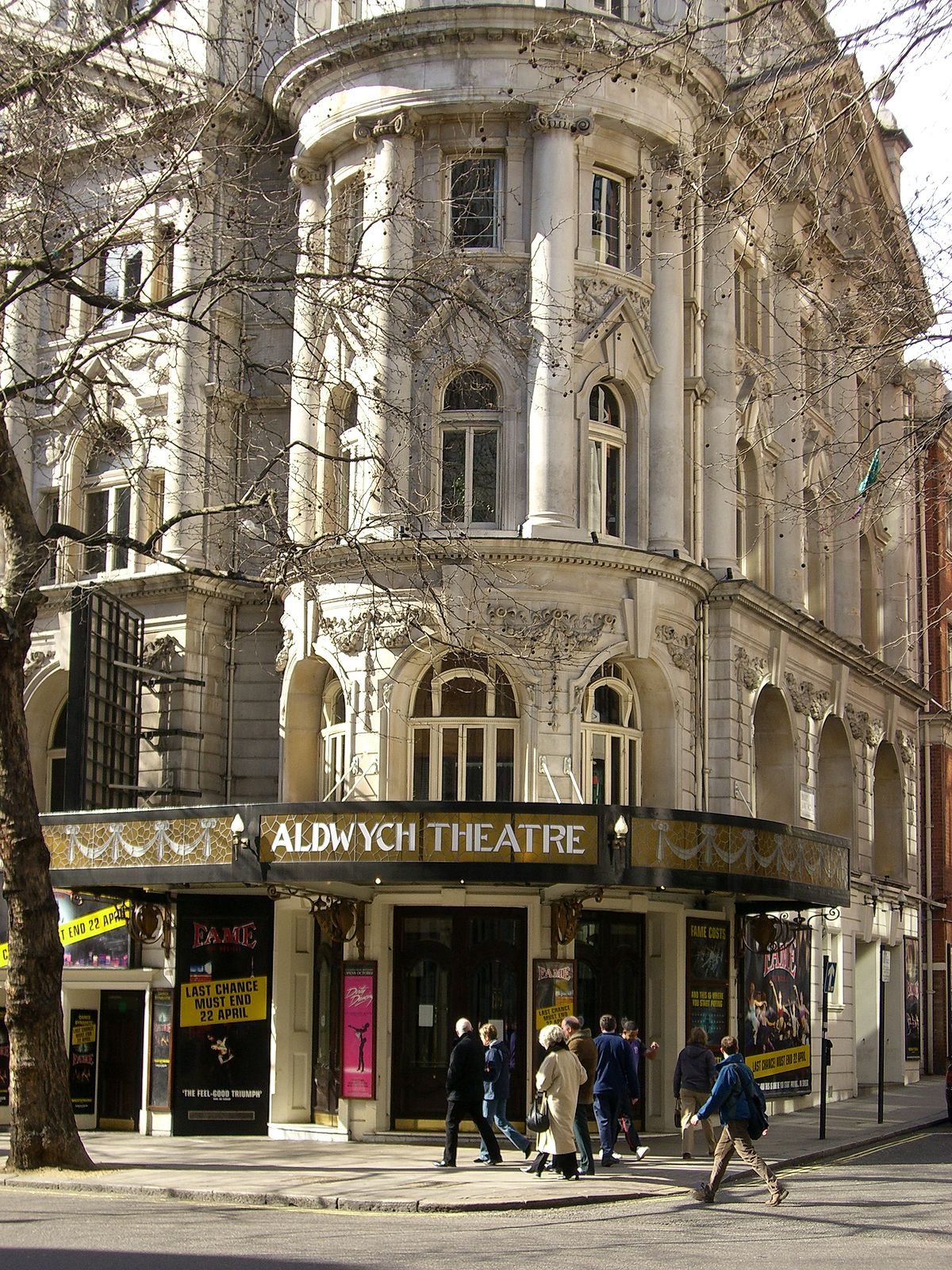
Aldwych Theatre London

Aldwych Theatre

London, England

✦   UK Performances · 1898–1925

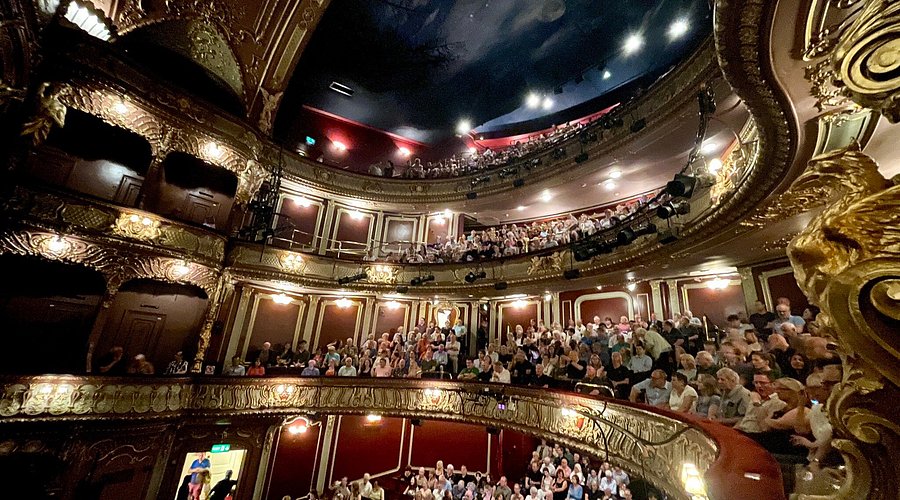
Apollo Theatre London

Apollo Theatre

London, England

✦   UK Performances · 1898–1925

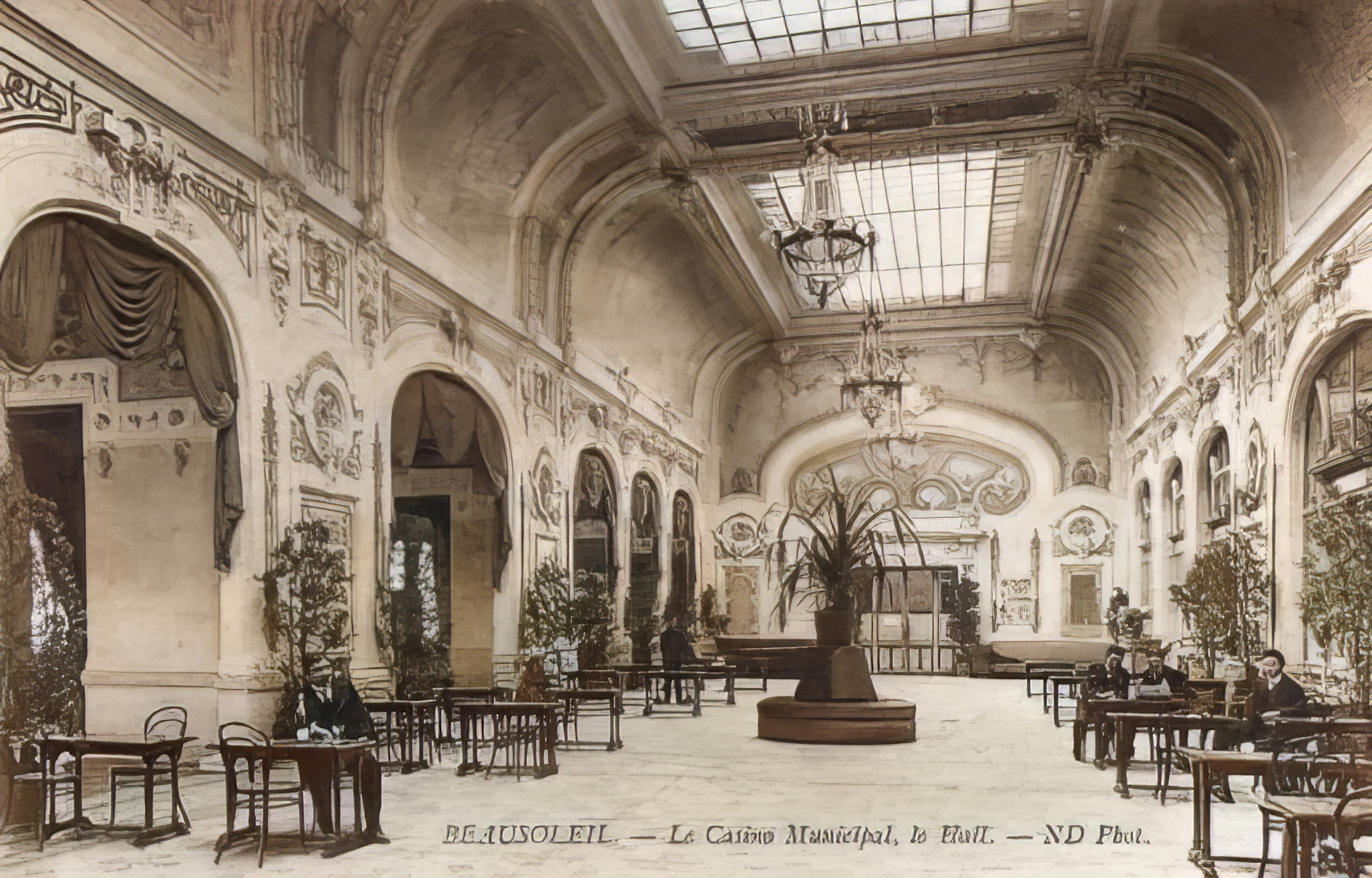
Casino Municipal Beausoleil

Casino Municipal

Beausoleil, Côte d'Azur, France

✦   March 1912

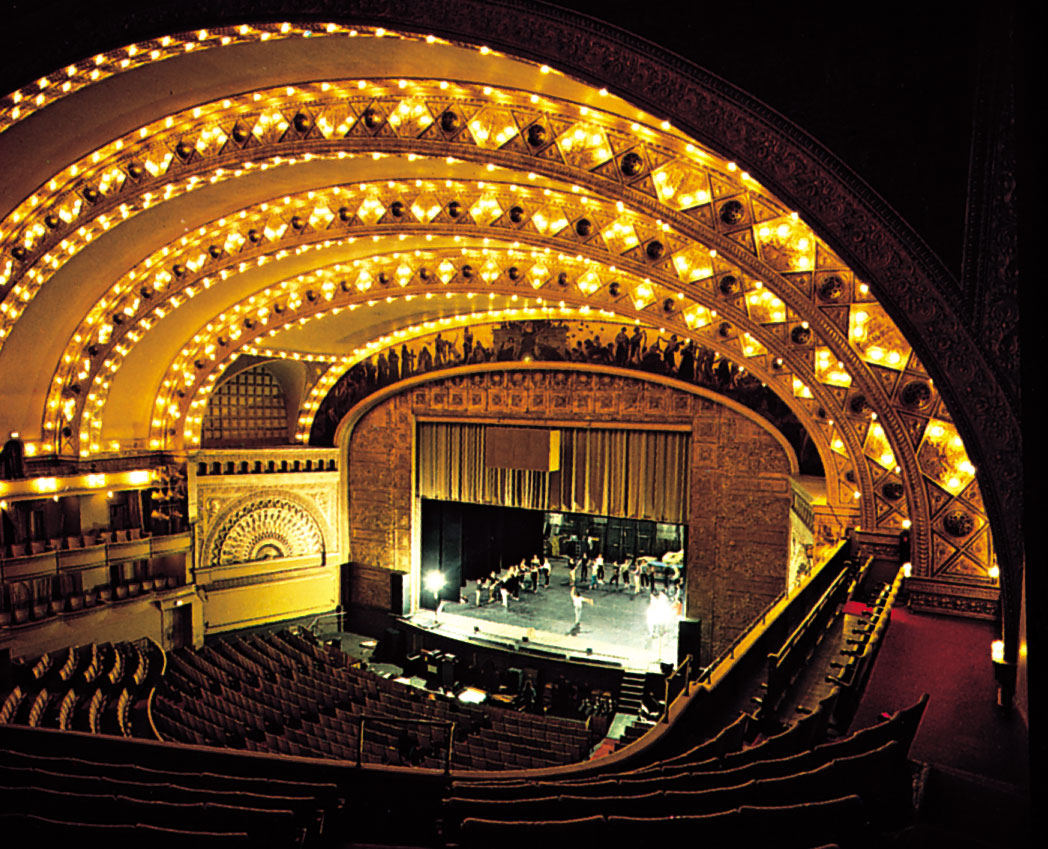
Chicago Auditorium

Chicago Auditorium

Chicago, Illinois, USA

✦   January 1908

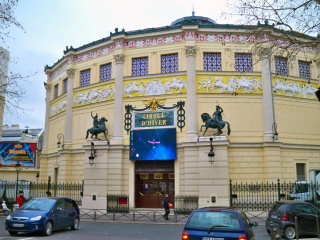
Cirque d'Hiver Paris

Cirque d'Hiver

Paris, France

✦   French Engagements

Empire Theatre Liverpool

Empire Theatre

Liverpool, England

✦   UK Performances · 1898–1925

Empire Theatre Johannesburg

Empire Theatre

Johannesburg, South Africa

✦   c. 1897–1898

Empire Theatre Shepherd's Bush

Empire Theatre

Shepherd's Bush, London

✦   UK Performances · 1898–1925

Hansa Theatre Hamburg

Hansa Theatre

Hamburg, Germany

✦   European Tour · c.1909–1912

His Majesty's Theatre London

His Majesty's Theatre

London, England

✦   UK Performances · 1898–1925

London Coliseum

London Coliseum

London, England

✦   UK Performances · 1898–1925

London Palladium

London Palladium

London, England

✦   UK Performances · 1898–1925

Majestic Theatre Chicago

Majestic Theatre

Chicago, Illinois, USA

✦   Orpheum Circuit · 1908

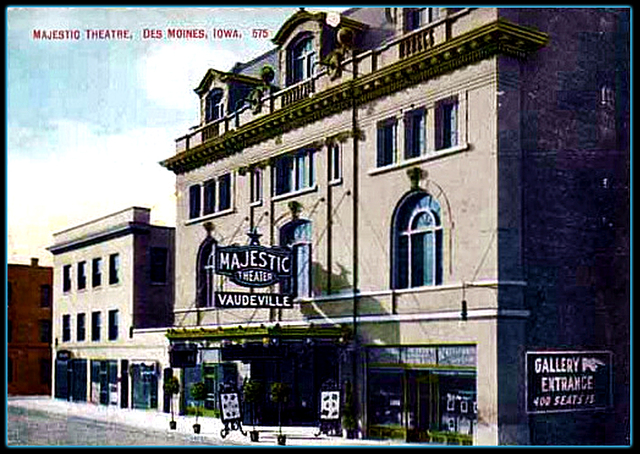
Majestic Theatre Des Moines

Majestic Theatre

Des Moines, Iowa, USA

✦   Orpheum Circuit · 1908

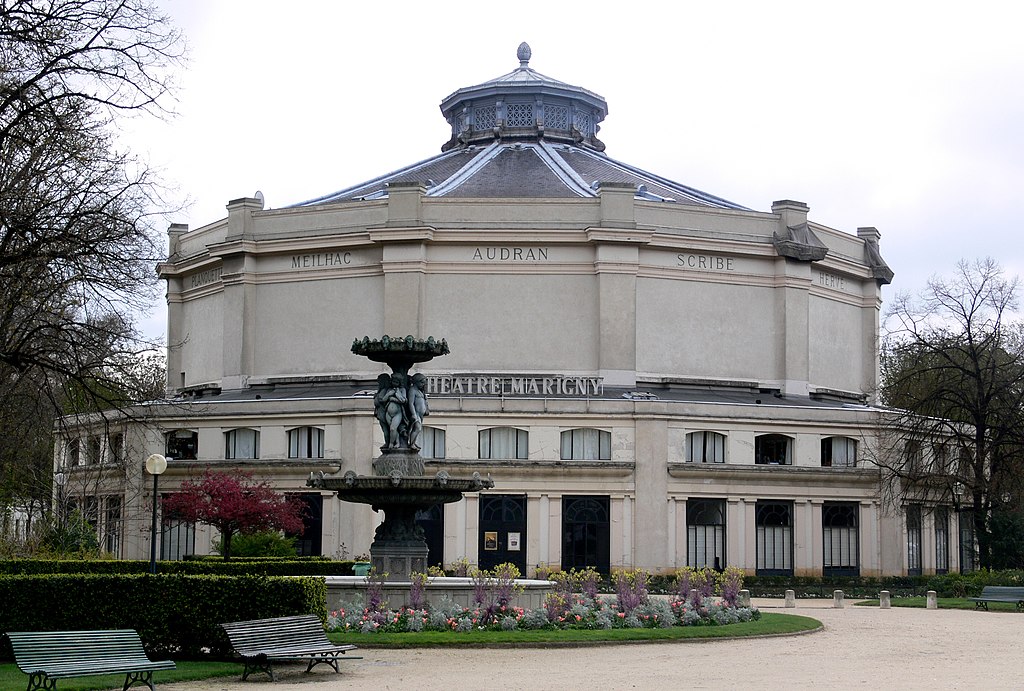
Théâtre Marigny Paris

Théâtre Marigny

Paris, France

✦   1909

Theatre Royal Barnsley

Theatre Royal

Barnsley, England

✦   UK Performances · 1898–1925

Theatre Royal Drury Lane

Theatre Royal, Drury Lane

London, England

✦   UK Performances · 1898–1925

Aldwych Theatre London

Aldwych Theatre

London, England

✦   UK Performances · 1898–1925

Apollo Theatre London

Apollo Theatre

London, England

✦   UK Performances · 1898–1925

Casino Municipal Beausoleil

Casino Municipal

Beausoleil, Côte d'Azur, France

✦   March 1912

Chicago Auditorium

Chicago Auditorium

Chicago, Illinois, USA

✦   January 1908

Cirque d'Hiver Paris

Cirque d'Hiver

Paris, France

✦   French Engagements

Empire Theatre Liverpool

Empire Theatre

Liverpool, England

✦   UK Performances · 1898–1925

Empire Theatre Johannesburg

Empire Theatre

Johannesburg, South Africa

✦   c. 1897–1898

Empire Theatre Shepherd's Bush

Empire Theatre

Shepherd's Bush, London

✦   UK Performances · 1898–1925

Hansa Theatre Hamburg

Hansa Theatre

Hamburg, Germany

✦   European Tour · c.1909–1912

His Majesty's Theatre London

His Majesty's Theatre

London, England

✦   UK Performances · 1898–1925

London Coliseum

London Coliseum

London, England

✦   UK Performances · 1898–1925

London Palladium

London Palladium

London, England

✦   UK Performances · 1898–1925

Majestic Theatre Chicago

Majestic Theatre

Chicago, Illinois, USA

✦   Orpheum Circuit · 1908

Majestic Theatre Des Moines

Majestic Theatre

Des Moines, Iowa, USA

✦   Orpheum Circuit · 1908

Théâtre Marigny Paris

Théâtre Marigny

Paris, France

✦   1909

Theatre Royal Barnsley

Theatre Royal

Barnsley, England

✦   UK Performances · 1898–1925

Theatre Royal Drury Lane

Theatre Royal, Drury Lane

London, England

✦   UK Performances · 1898–1925

Documents

The paper trail of a remarkable life

📄 PDF

22 Pages

✦   Featured Document   ✦

The Life Story of Ellen Mary Ann Dunn

Ancestry.co.uk  ·  Complete Genealogical Record  ·  2026

The complete Ancestry life story document for Ellen Mary Ann Dunn — tracing her life from birth in Islington in 1879 through to her death in 1934. This remarkable 22-page document brings together certified copies of original records: birth and baptism, residence, marriage, the tragedy of Baby Girl Flexmore, census returns of 1901, 1911 and 1921, the deaths of Ellen and George, burial register, probate, and the rediscovery of the grave in 2023. Each entry is accompanied by scanned images of the original documents.

Open Full Document

✦   Individual Records   ✦

Births
Marriages
Deaths

GRO Death Certificate · 1899

Death Certificate — Baby Girl Flexmore

28 July 1899 · 24 Coleshill Street, Birmingham · Cause: premature birth · Lived one hour · Father in attendance · GRO certified copy · Application No. 14409877-1

View document →

Civil Death Index · 1899

Civil Death Index — Baby Girl Flexmore

Q3 1899 · Birmingham, Warwickshire · Last name: Flexmore · Age: 0 · England & Wales Deaths 1837–2007 · Volume 6D, Page 41

View document →

GRO Death Certificate · 1933

Death Certificate — George Ambrose White

26 September 1933 · St. Bartholomew's Hospital, London City · Cause: mesenteric thrombosis · Aged 55 · Informant: Ellen White, widow · GRO certified copy · Application No. 14437479-1

View document →

Civil Death Record · 1933

Civil Death Register — George Ambrose White

26 September 1933 · St. Bartholomew's Hospital · 28 Colebrooke Row, Islington · Newspaper Inspector · Civil register entry

View document →

GRO Death Certificate · 1934

Death Certificate — Ellen Mary Ann Dunn White

19 January 1934 · 77a Highgate Hill, Islington · Cause: pneumococcal meningitis & acute primary pneumonia · Aged 54 · Informant: F. Dunn, brother · GRO certified copy · Application No. 14415487-1

View document →

Civil Death Record · 1934

Civil Death Register — Ellen Mary Ann Dunn White

19 January 1934 · 77a Highgate Hill, Islington · Widow of George Ambrose White · 28 Colebrooke Row, Islington · Civil register entry

View document →

Probate
Burial & Interment
Electoral Registers
Other Records

Write to Lily

She is still receiving correspondence — ninety-two years on

Ellen Mary Ann Dunn — Lily Flexmore

Ellen Mary Ann Dunn
1879–1934

The research into the life of Ellen Mary Ann Dunn — Lily Flexmore — is ongoing. New records are being digitised all the time, and new discoveries continue to emerge. If you have information, a photograph, a family connection, or simply a wish to say hello, Lily would be delighted to hear from you.

Perhaps you have encountered the Flexmore name in your own family history research. Perhaps you have found a playbill, a newspaper cutting, or a theatre programme that mentions Lily. Perhaps you are descended from one of Ellen’s brothers or sisters, or from the White family of Clerkenwell and Walthamstow. Perhaps you simply want to share your thoughts on this remarkable woman’s story.

Whatever brings you to write — you are most welcome.

✦   General Enquiries   ✦

Research & Family History

For questions about Ellen’s story, the search, family connections, or the Flexmore name in your own research

✉   [email protected]

✦   The Researcher   ✦

Direct Correspondence

To contact the researcher directly with documents, photographs, or information that may assist in the ongoing search

✉   [email protected]

✦   Ancestry.co.uk   ✦

The public Ancestry tree for Ellen Mary Ann Dunn is open for contributions. If you have information to add, or if you believe you may share a family connection, you are warmly invited to visit and make contact through the tree.

🌳   Visit the Ancestry Tree for Ellen Mary Ann Dunn   →

“We will continue to search.”

Ellen Mary Ann Dunn   ·   1879–1934

Flexmore: The Stage Name That Stretched Across Generations

From Harlequin to Music Hall — the tradition behind the name

When Ellen Mary Ann Dunn took to the stage as Lily Flexmore, she was not simply adopting a professional alias. She was stepping into a name that already carried decades of weight — a name associated with physical brilliance, acrobatic mastery, and the finest traditions of British pantomime and music hall.

But the story of how she came to it is not simple, and it is not the story of a bloodline. Flexmore was never merely a family name. It was something closer to a performing tradition — a designation that circulated through the Victorian theatrical world, was earned through training and craft, and was carried by performers who had no blood connection to one another at all. Ellen was performing as Lily Flexmore from 1896. She did not marry George Ambrose White — who performed as George Flexmore — until February 1899. She came to the name in her own right, three years before the marriage. The question of how she came to it — and what the name truly signified — takes us deep into one of the most extraordinary theatrical dynasties of the Victorian era.

✦   Where the Name Began   ✦

Richard Flexmore
1824 – 1860

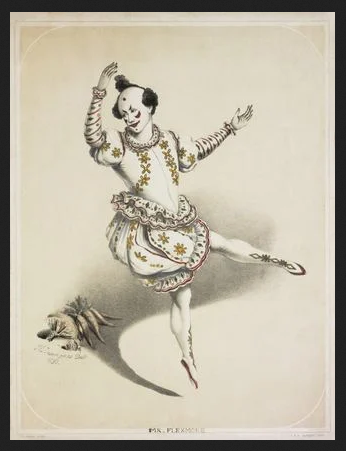
The name Flexmore as the world came to know it was made by Richard Flexmore (1824–1860) — but even he did not invent it. His real name was Richard Flexmore Geatter: Flexmore was the stage name of his own father, a well-known dancer who died young. Richard inherited it, made it legendary, and gave it a meaning that would outlast him by half a century.

Beginning his theatrical career at the age of eight at the Victoria Theatre, Richard rose to become one of the most celebrated clowns and Harlequins on the Victorian stage. He was especially noted for his close imitation of the great dancers of the day — Perrot, Taglioni, Cerito — and his physical gifts were something his contemporaries struggled to describe adequately. He appeared at the Olympic, the Princess’s, the Strand, the Adelphi, and Covent Garden, and married Francisca Christophosa, daughter of the great French clown Jean-Baptiste Auriol, with whom he performed across Europe.

He died of consumption on 20 August 1860, aged thirty-six, at 66 Hercules Buildings, Lambeth — having, as contemporaries noted, overtaxed his extraordinary body in pursuit of the audience’s applause. He and Francisca had no children together. His widow returned to Paris and married a cousin, Achille Auriol. On 1 September 1862 she gave birth to a daughter. The baby died that same day. Francisca herself died just six days later, on 7 September 1862, aged thirty-three. Three lives — mother, child, and the hope of a line — extinguished within a single week. The Geatter bloodline was gone. But the name — Flexmore — lived on entirely independently of any family, carried forward by the performing world that had loved him.

He and Francisca had no children. After his death she returned to Paris, where she remarried. She became pregnant, but her infant passed away on the day she gave birth, September 1st, 1862. Francisca herself passed away six days later, on September 7th. The bloodline ended. But the name lived on.

Richard Flexmore The Clown — Victorian portrait

Richard Flexmore (real name Richard Flexmore Geatter) · The Clown · Victorian portrait. Celebrated for his physical grace and the mimicry of the era’s great dancers, he died aged thirty-six having overtaxed his body in pursuit of the crowd’s applause.

Richard Flexmore Geatter 1824–1860

Richard Flexmore Geatter · 1824–1860 · His reputation endured long after his death: fourteen years on, his portrait was still being published alongside those of the great Victorian clowns.

✦   The Illustrated Sporting and Dramatic News, December 1874   ✦

“Some Famous Clowns”

Drawn by F. Trainer · Published 19 December 1874 · Fourteen years after his death, Flexmore’s name endured

Some Famous Clowns — Illustrated Sporting and Dramatic News, December 1874

“Some Famous Clowns” · Drawn by F. Trainer · The Illustrated Sporting and Dramatic News, 19 December 1874. Portraits include: Charles Lauri, Tom Mathews, Little Whiting, Boleno, Richard Stilt JRSW, Paul Herring RST, Mr Joseph Grimaldi (born 18 December 1779), Stephen Coote (The Modern Clown, T.R. Drury Lane 1874–5), Joe Grimaldi as Clown in Troliffe, and Flexmore.

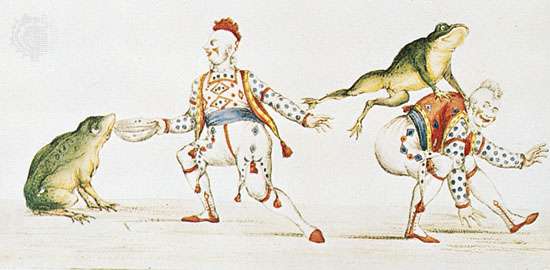
Joseph Grimaldi — Watercolour with frogs

Joseph Grimaldi (1778–1837) · Watercolour. Grimaldi, the father of modern clowning, cast a long shadow over every performer in the Victorian pantomime tradition — Flexmore included.

In the Christmas 1874 edition of the Illustrated Sporting and Dramatic News, the artist F. Trainer assembled a commemorative page of portraits under the title “Some Famous Clowns” — gathering the legendary names of Victorian pantomime. Among them: Joseph Grimaldi, Charles Lauri, Tom Mathews, Paul Herring — and Flexmore. Fourteen years after his death, the name still commanded that company.

A second, larger and more fully captioned version of the same feature appeared under the heading “Waes-Hael!” — an ancient seasonal toast meaning Good Health — confirming each portrait by name. Both versions are reproduced here.

To be placed alongside Grimaldi, even posthumously, was the highest possible honour the Victorian stage could bestow.

✦   Grimaldi & Clerkenwell   ✦

“Little Italy” — The Streets Ellen Called Home

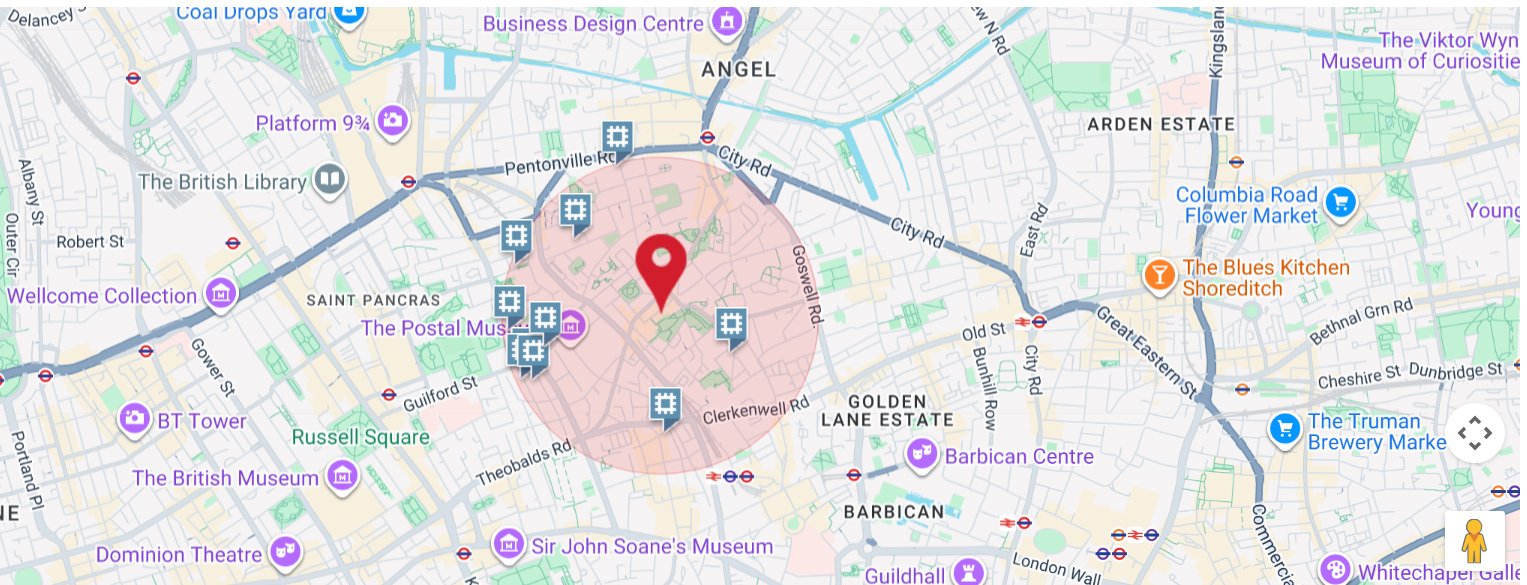
There is a further connection that makes Grimaldi’s presence in this story more than symbolic. From 1818 to 1829, Grimaldi lived at 56 Exmouth Market — formerly 8 Exmouth Street and 8 Braynes Row — in Clerkenwell. This was the very neighbourhood that, in the later Victorian era, became known as “Little Italy”, home to a large community of Italian immigrants and performers. It was also the homeplace of Ellen Mary Ann Dunn, who was born just streets away at 56 Peerless Street.

Charles Dickens, who edited Grimaldi’s voluminous memoirs, wrote that after 1820 his subject suffered “little or nothing but one constant succession of afflictions and calamities, the pressure of which nearly bowed him to the earth.” One of Grimaldi’s remaining pleasures was to drink with friends at the Myddleton’s Head, a pub close to Sadler’s Wells Theatre — his stamping ground for more than thirty years. When he retired in 1828, the ailing clown gave a farewell performance there on St Patrick’s Day, after which he wept, in the words of a witness, “with an intensity of suffering that it was painful to witness and impossible to alleviate.” The following day, his home in Exmouth Market was besieged by fans.

Number 56 Exmouth Market still stands — apart from the addition of a shop front, it is the only house on the eastern side of the street to have retained most of its 18th-century character. Grimaldi died in 1837 at 22 Calshot Street, Islington (formerly 33 Southampton Street; now demolished) — not far from the streets where, forty-two years later, Ellen Mary Ann Dunn would be born.

The greatest clown England ever produced lived and died in the same streets where the last bearer of a name he inspired would one day be born. Clerkenwell holds them both.
It was this reputation — this cultural weight — that the name Flexmore carried into the late Victorian and Edwardian music hall. And it was precisely because the name signified something — physical brilliance, acrobatic artistry, a particular tradition of the body on stage — that it could be worn by performers who bore no blood relation to Richard Flexmore Geatter at all.
Waes-Hael — Illustrated Sporting and Dramatic News Christmas 1874, fuller version

“Waes-Hael!” · The Illustrated Sporting and Dramatic News, Christmas 1874 · The fuller captioned version of the portrait page, with Flexmore named in the middle row.

✦   Islington & Clerkenwell   ✦

The Blue Plaques of Clerkenwell

A neighbourhood already rich with commemoration — and one name yet to be honoured

Map of Clerkenwell showing Blue Plaque locations including Joseph Grimaldi

Blue Plaque locations in the Clerkenwell and Islington area — the neighbourhood shared by Joseph Grimaldi and Ellen Mary Ann Dunn. Grimaldi’s plaque at 56 Exmouth Market lies within walking distance of 56 Peerless Street, where Ellen was born.

✦   A Campaign in the Making   ✦

A Blue Plaque for Lily Flexmore
Colebrooke Row, Islington

After nearly four decades performing across three continents, Ellen Mary Ann Dunn — known to the world as Lily Flexmore — retired with her husband George to Colebrooke Row, Islington. It was here, in the quiet streets above the Regent’s Canal, that they spent their final years together.

The case for a blue plaque is a strong one. Ellen was a pioneering woman of the Victorian and Edwardian stage — an acrobatic contortionist, dancer, singer and comedienne who performed from Johannesburg to New York to Berlin. She was also one of the founding members of the British Ladies Football Club in 1895 — among the first women to play association football professionally in Britain. Her story was lost for nearly a century. It deserves to be told, in stone, on the street where she came home.

Ms Karen Wall — Ellen’s great-great-niece, and the person whose twenty years of dedicated research brought Ellen’s story back to light — is already pursuing a Blue Plaque nomination on Ellen’s behalf. This website exists in support of that effort. If you share the view that Ellen Mary Ann Dunn merits a blue plaque on Colebrooke Row, please do get in touch using the contact form below — and help make the case.

The English Heritage Criteria

English Heritage blue plaques are awarded to individuals who were born, lived, or worked at a London address and who made an outstanding contribution to human welfare or happiness — and whose work was of a nature that future generations will value the commemoration. Ellen Mary Ann Dunn meets every one of those criteria.

Contact English Heritage

blue.plaques@english-heritage.org.uk
Blue Plaques Team, English Heritage
6th Floor, 100 Wood Street, London EC2V 7AN

Nomination Form →

✦   A Name That Could Be Earned   ✦

The Flexmore World

The performers, the school, and the tradition that kept the name alive

After Richard’s death, the Flexmore name spread outward through the performing world in ways that had nothing to do with inheritance. Several distinct performers and families carried it — sometimes by blood connection to a secondary Flexmore line, sometimes simply by training and association. What emerges is a picture of Flexmore as something closer to a school or a tradition than a surname: a designation that could be worn by those who had mastered the particular physical art it represented.

✦   A Separate Line   ✦

Frederick Flexmore

1846–1892 · Decorative Artist & Soloist

A later bearer of the Flexmore name and a performer in his own right. His children — Florence, George, and Handel — performed together as The Flexmore Three, with Florence appearing at only nine years old. Florence later toured with her sisters as The Sisters Chester. Frederick’s son, also called Fred Flexmore (b. 1869), is one possible route by which Ellen encountered the name and its associated training.

✦   The Leg-Mania Specialist   ✦

Laurence Sidney May

1863–1928 · Also Known As Fred Flexmore

An exponent of Leg-Mania — a demanding performance style built around feats of extreme leg flexibility and control, entirely in keeping with the physical tradition the Flexmore name carried. He performed professionally as Fred Flexmore and was active on the music hall stage until a career-ending injury in 1906, after which he continued successfully as a pantomimist until his death in 1928. He is one of the most plausible figures through whom Ellen may have encountered the Flexmore tradition.

✦   A Possible Training Ground   ✦

The Flexmore School of Dance

South London · Possible Route to the Name

It is possible that a Flexmore School of Dance operated in South London during the period of Ellen’s training — run by one or more of the Flexmore-associated performers. If so, it would explain both Ellen’s adoption of the name and the fact that others adopted it too: the name may simply have been what graduates of that school performed under. This remains unconfirmed, but it is the most coherent explanation for the pattern of adoption that the historical record shows.

✦   Evidence That the Name Was Adoptable   ✦

The Sisters Flexmore — The Prodger Sisters

The clearest evidence that Flexmore was not a bloodline but a performing designation comes from Florence, Elizabeth and Lydia Prodger, who toured and performed as The Sisters Flexmore. The Prodgers had no family connection to Richard Flexmore Geatter, to Frederick Flexmore, or to any of the other Flexmore performers. They simply adopted the name — and the performing world accepted it, because the name meant something about what they did, not who they were born to. Ellen Mary Ann Dunn did exactly the same.

✦   Before the Marriage   ✦

How Ellen Became Lily Flexmore

A name she earned — and only later shared

Ellen was performing as Lily Flexmore from 1896 — at the age of seventeen, beginning her full-time professional career. She did not marry George Ambrose White (who performed as George Flexmore) until February 1899. The name was hers before it was shared. George likely came to it by his own parallel route, as a comedian who had encountered the same tradition — whether through training, association, or the school — before he and Ellen met.

How precisely Ellen came to the name remains unconfirmed. She trained from childhood as a dancer, gymnast and contortionist — and it is possible she trained at a Flexmore School of Dance, or under one of the Flexmore-associated performers, perhaps Laurence Sidney May or the younger Fred Flexmore. What is clear is that she adopted the name as a tribute to, and identification with, a particular tradition of physical performance — and that she kept it for the rest of her life, long after any formal connection to its originators had faded.

Richard Flexmore

Geatter · 1824–1860

The originator. Inherited the name from his father, made it legendary, left no direct heirs.

Laurence Sidney May

Fred Flexmore · 1863–1928

Leg-Mania specialist. Performed as Fred Flexmore until injury in 1906, then as pantomimist. A possible tutor.

George Flexmore

George Ambrose White · 1877–1933

Ellen’s husband. Performed as a comedian under the Flexmore name. How he came to it is likewise unconfirmed.

Lily Flexmore

Ellen Mary Ann Dunn · 1879–1934

Performing as Lily Flexmore from 1896 — three years before her marriage. The name was hers in her own right.

When Ellen died in January 1934 — four months after George — the name Flexmore passed from the stage. But for nearly four decades she had carried it across three continents, from Johannesburg to New York to Berlin, performing to audiences who associated it with something rare: a body trained to the very limits of human possibility, and the artistry to make that training look effortless.

She did not come to the name through marriage. She came to it through her body, her training, and her craft — and she made it her own long before she made it shared.

✦   Further Research   ✦

Ancestry Trees

Public Ancestry trees for the key figures in the Flexmore story — open for contributions

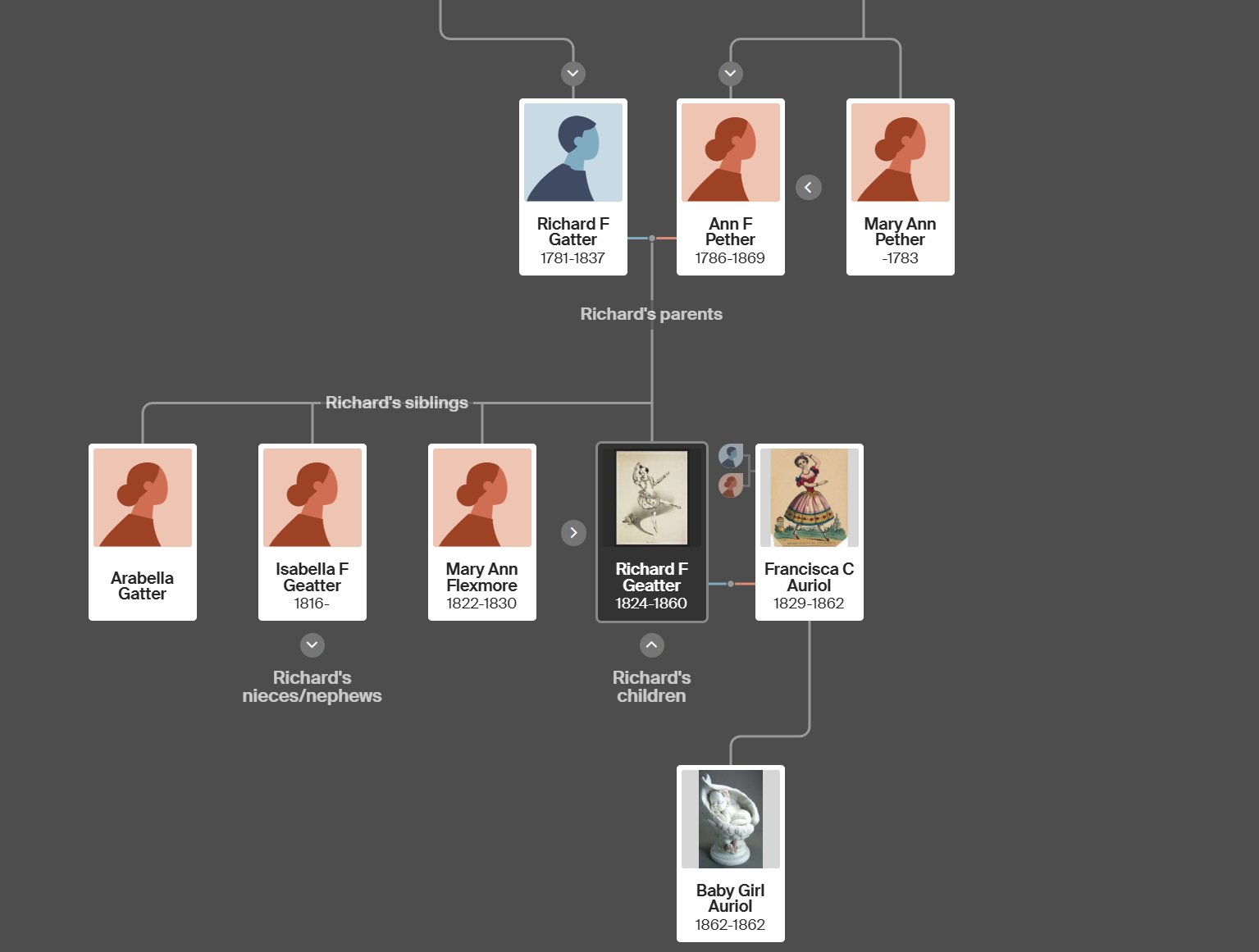
Richard Flexmore Geatter Family Tree

✦   Ancestry Tree

Richard Flexmore Geatter

1824 – 1860

Father Richard F Gatter (1781–1837) · Mother Ann F Pether · Sister Mary Ann Flexmore (1822–1830) · Wife Francisca C Auriol (1829–1862). After Richard’s death in 1860, Francisca returned to Paris and married her cousin Achille Auriol. Their daughter was born and died on 1 September 1862. Francisca died six days later, aged 33. The line ended there.

View on Ancestry →

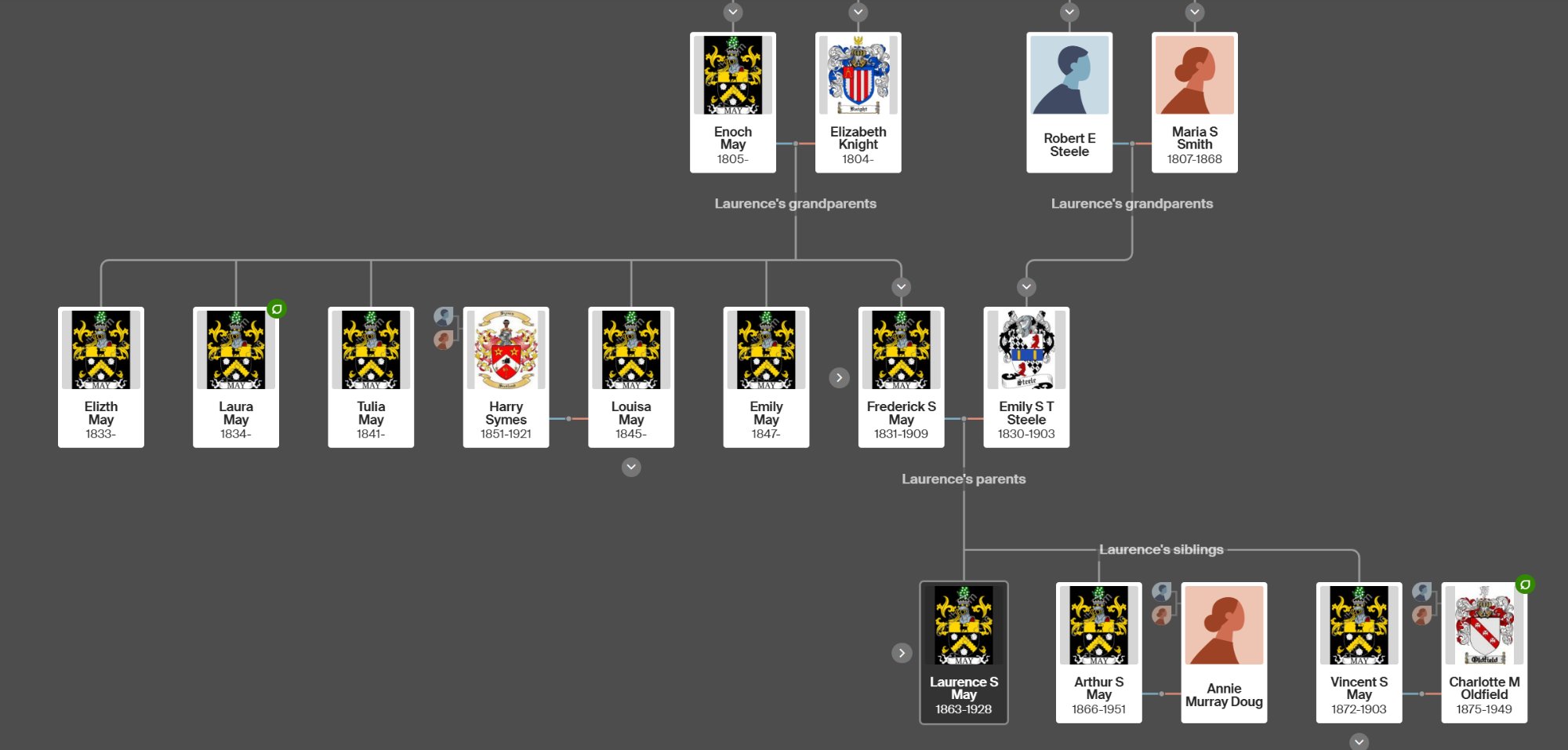
Laurence Sidney May Family Tree

✦   Ancestry Tree

Laurence Sidney May

1863 – 1928 · Performed as Fred Flexmore

Parents: Frederick S May (1831–1909) & Emily S T Steele (1830–1903) · Grandparents: Enoch May & Elizabeth Knight · Siblings: Arthur, Vincent, Charlotte. Leg-Mania specialist; performed as Fred Flexmore until injured in 1906.

View on Ancestry →

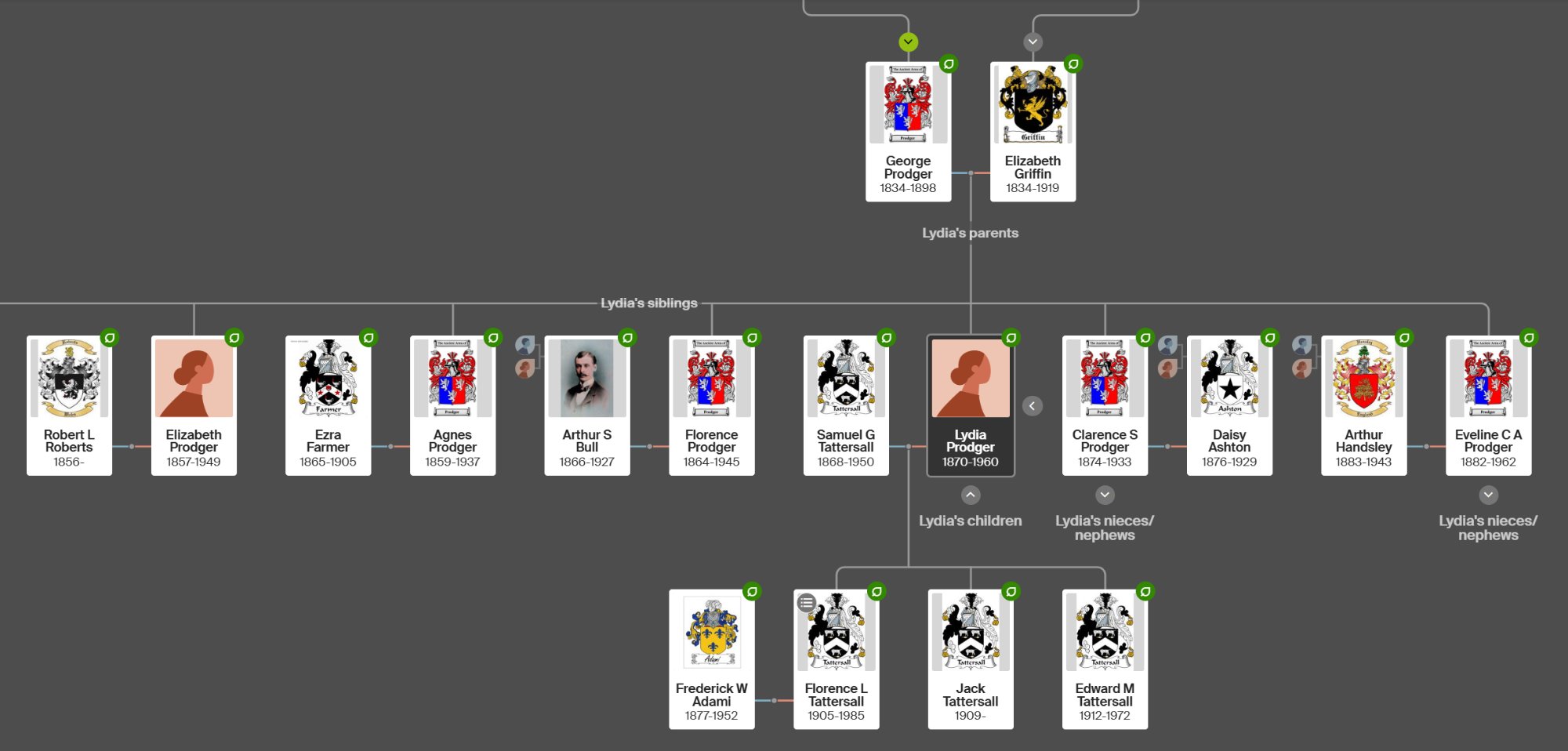
Prodger Family Tree — The Sisters Flexmore

✦   Ancestry Tree

The Prodger Sisters

The Sisters Flexmore

Parents: George Prodger (1834–1898) & Elizabeth Griffin (1834–1919) · Florence Prodger (1864–1945) · Elizabeth Prodger (1857–1949) · Lydia Prodger (1870–1960). No blood connection to the Flexmore family — the name was adopted through training and association.

View on Ancestry →

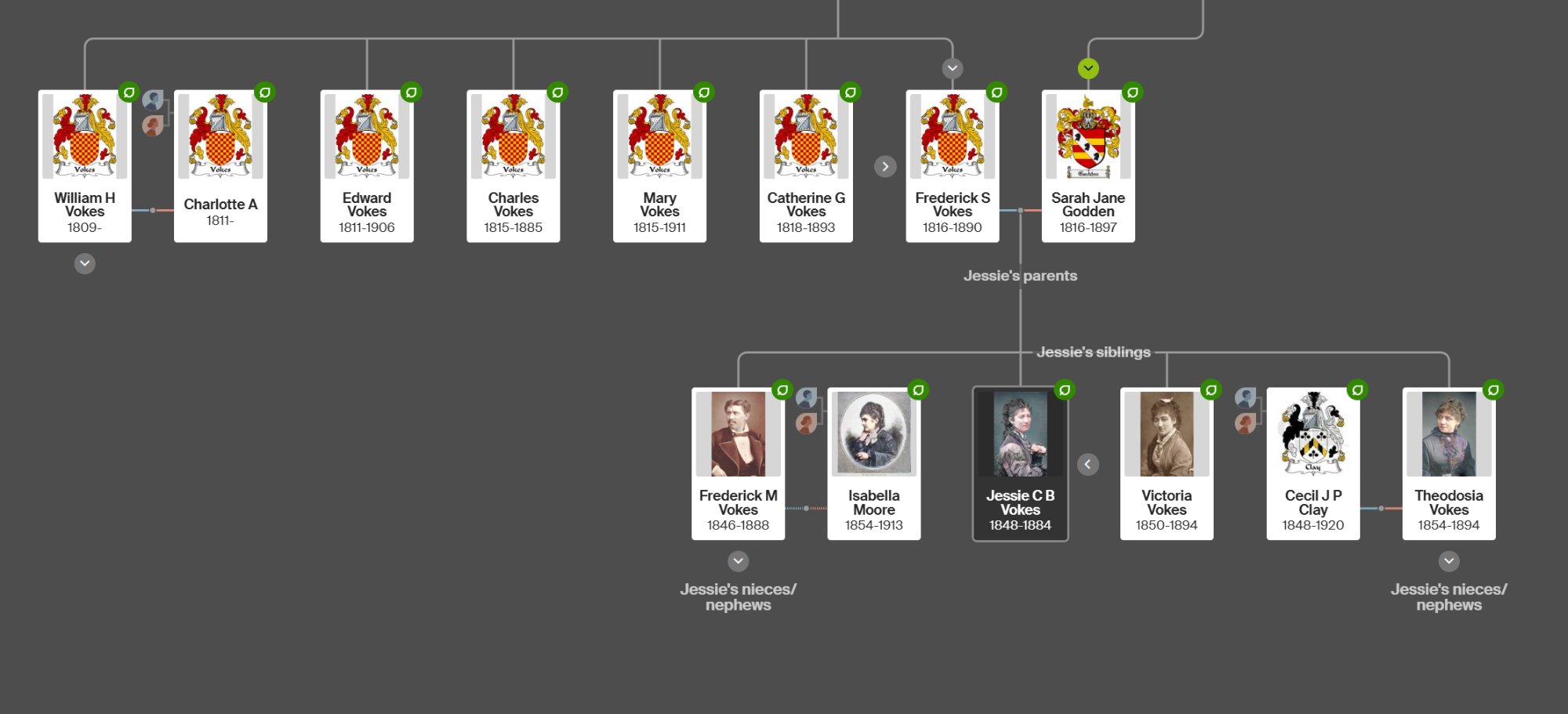
Vokes Family Tree

✦   Ancestry Tree

The Vokes Family

Leg-Mania Performers

Parents: Frederick S Vokes (1816–1890) & Sarah Jane Godden (1816–1897) · Frederick M Vokes (1846–1888) · Jessie C B Vokes (1848–1884) · Victoria Vokes (1850–1894) · Theodosia Vokes (1854–1894). Fred Vokes was one of the most celebrated Leg-Mania performers of the Victorian era.

View on Ancestry →

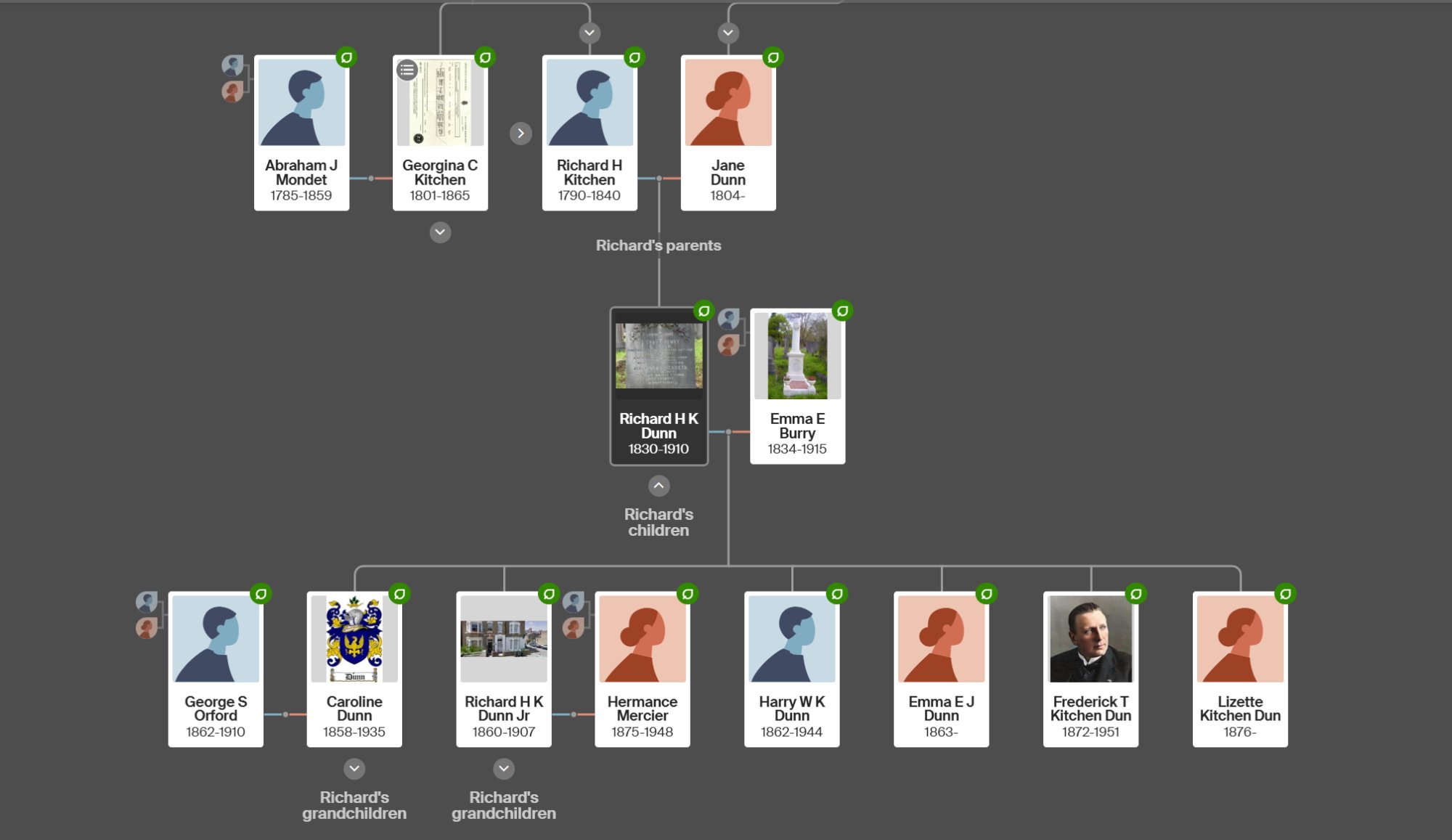
Richard Henry Kitchen Dunn Family Tree

✦   Ancestry Tree

Richard Henry Kitchen Dunn

1830 – 1910

Parents: Richard H Kitchen (1790–1840) & Jane Dunn (1804–) · Wife: Emma E Burry (1834–1915) · Children: Caroline Dunn (1858–1935), Richard H K Dunn Jr (1860–1907), Harry W K Dunn (1862–1944), Emma E J Dunn (1863–), Frederick T Kitchen Dunn (1872–1951), Lizette Kitchen Dunn (1876–). A Dunn family branch connected to the broader network of Victorian performing families researched in relation to Ellen Mary Ann Dunn’s story.

View on Ancestry →

Sources & Bibliography

Records consulted & works referenced in this research

✦   Research Acknowledgements

The identification of Ellen Mary Ann Dunn as the player known as Ruth Coupland is credited to the meticulous research of football historian Stuart Gibbs. Stuart is a leading authority on the pioneering women of the British Ladies Football Club and on the early history of women's football in Britain and Ireland. His work — which encompasses the art exhibition Moving the Goalposts, published academic articles, and sustained original research into the players, pseudonyms, and lives of the BLFC ladies — has been foundational to the recovery of these hidden stories. This website is deeply indebted to his scholarship.

✦   Photograph Acknowledgements

Several of the photographs on this site are held by members of Ellen's family and have been shared with great generosity. Sincere thanks are due to the following for permitting their use:

Ms Karen Wall

Great-great-niece of Ellen Mary Ann Dunn

Karen has been the driving force behind the search for Ellen for over twenty years, and without her sustained efforts Ellen's story would have remained lost. Her generosity in sharing family photographs has been invaluable to this site.

Paul Duffett

Whose great-great-uncle was Ellen's brother, John Joseph Dunn (1876–1946)

Paul has shared photographs from the family collection, including stage portraits of Lily Flexmore that might otherwise have been lost. He visited the grave in January 2025 and placed a portrait of Ellen at the graveside.

Ms Jill Adams

Family relative of Ellen Mary Ann Dunn

Jill has kindly shared photographs from her family collection which have contributed to our picture of Ellen's stage career and professional life.

Ms Cathy McBrearty

Family relative of Ellen Mary Ann Dunn

Cathy generously shared the beautiful colourised portrait of Ellen — one of the finest images of her on this site — from the family's personal collection.

✦   Genealogical Databases

✦   Newspaper Archives

✦   Published Works

  • A History of Women's Football — Jean Williams
  • Unsuitable for Females — Carrie Dunn
  • When Women's Football Came to the Island — Stuart Gibbs
  • Playing Pasts — Stuart Gibbs
  • The Captain and the Contortionist — Stuart Gibbs
  • Following the History of Women's Football in Glasgow — Stuart Gibbs
  • The British Ladies' Football Club — Patrick Brennan (donmouth.co.uk)

✦   Companion Research

  • Birth of the Lionesses The Original Lady Footballers of 1895 — the companion research site that contains the full biography of Ellen Dunn alongside the stories of all the British Ladies Football Club players.